
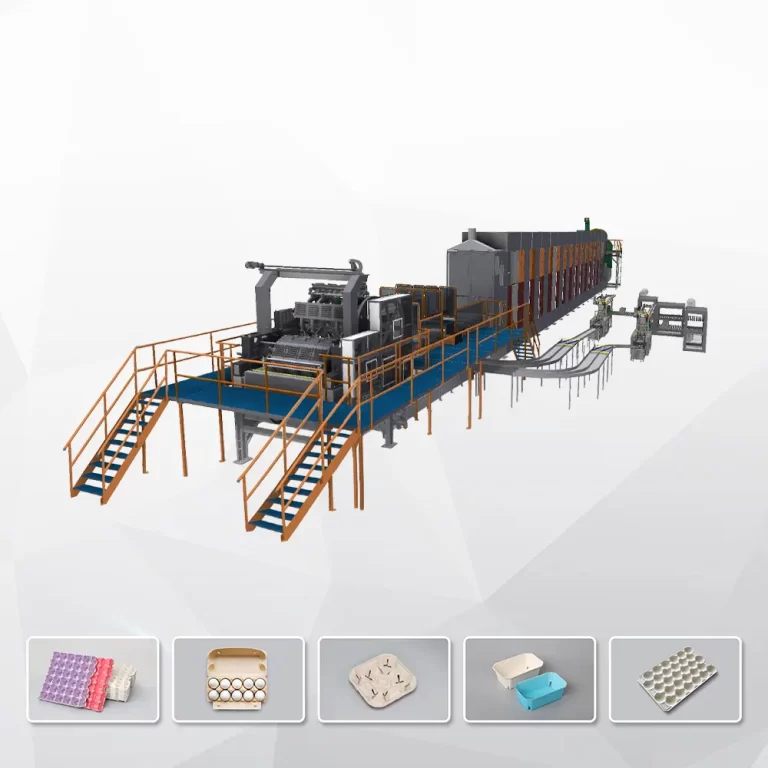
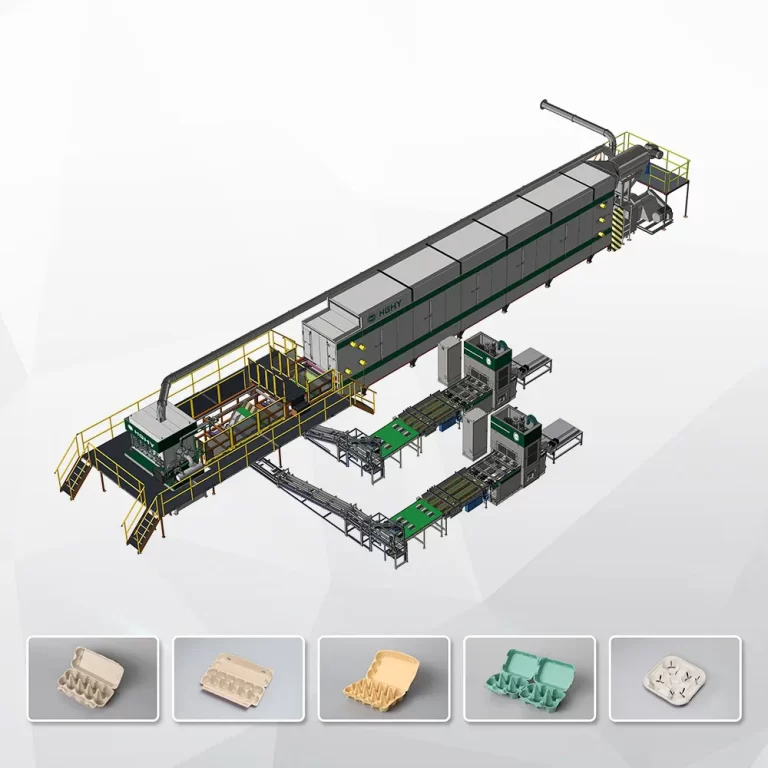
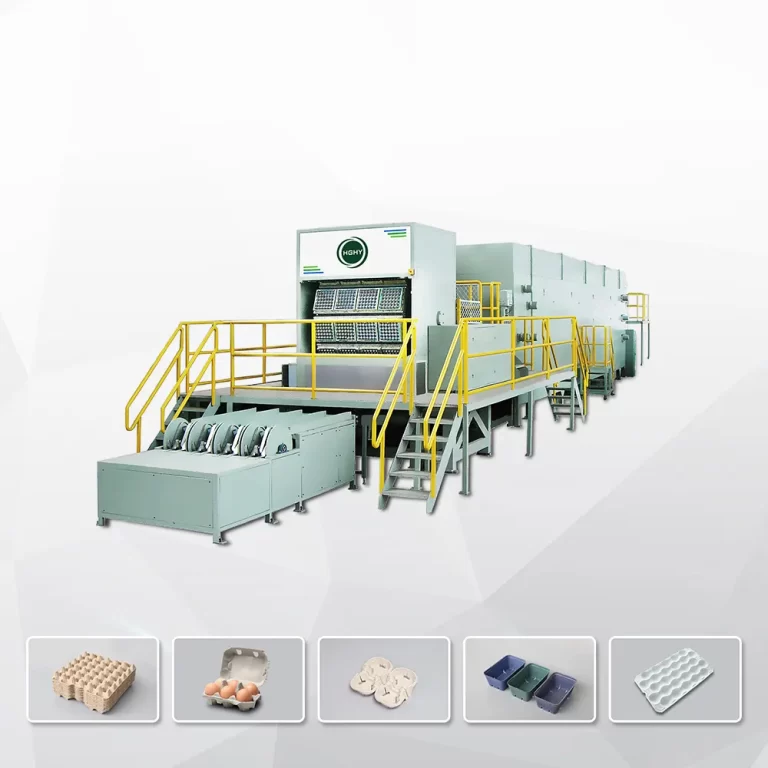

If you’ve watched a manual labeling crew keep up with a high-speed egg packing line, you already know the problem: human hands can’t match machine throughput, and a misaligned label on 10,000 cartons a day adds up to real liability. Automatic sticker labeling machines for egg cartons exist precisely to close that gap — but how they do it, and which configuration is right for your operation, isn’t obvious until you understand what’s happening inside the machine.
What Is an Automatic Egg Carton Labeling Machine?
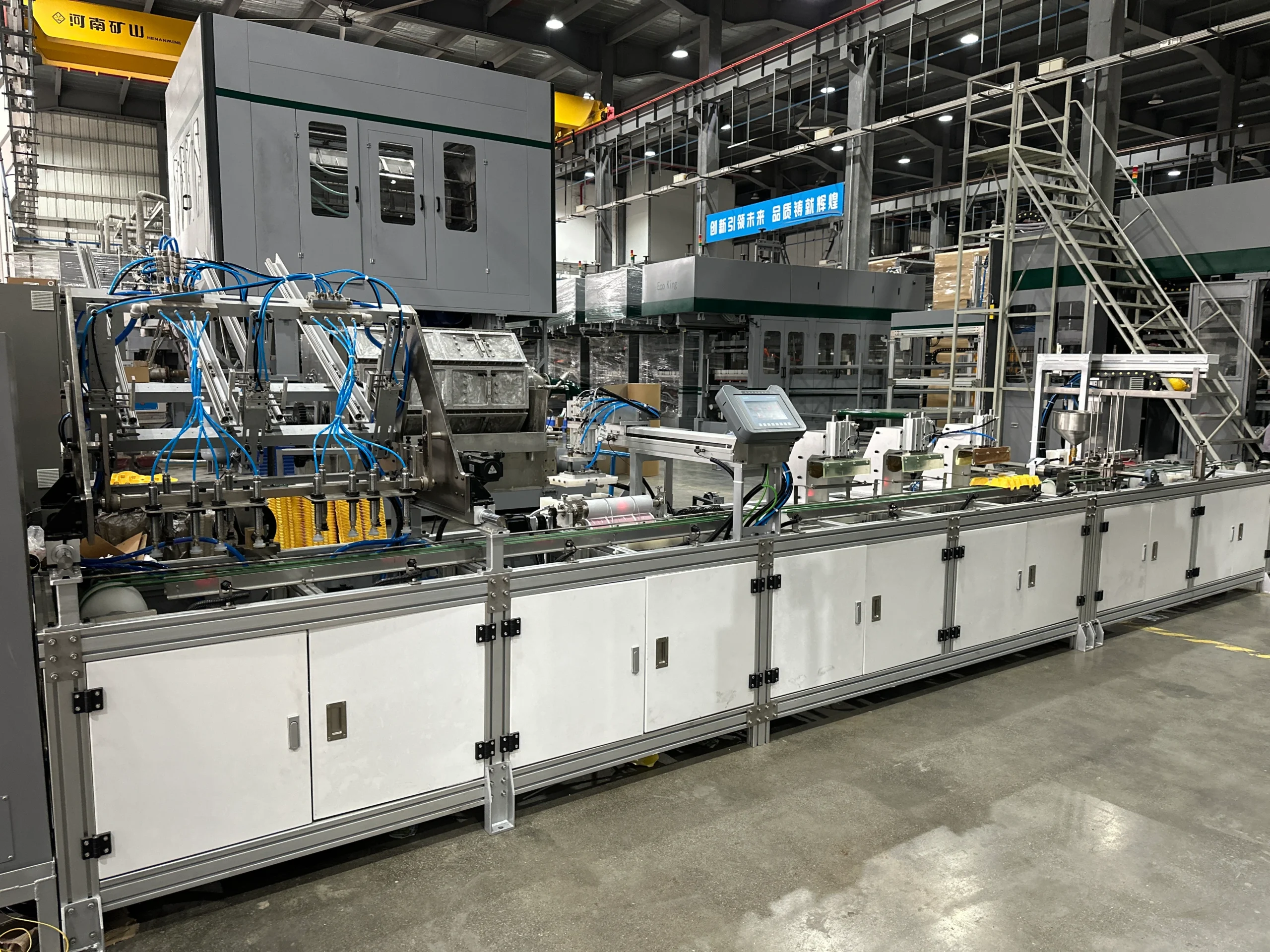
An automatic egg carton labeling machine is a purpose-built piece of packaging automation that applies pre-printed or on-demand-printed adhesive labels to the top, side, or wrap-around surface of egg cartons and molded pulp trays — without manual placement at any stage of the process. The machine handles the full cycle: picking a carton from a stacked hopper, conveying it to the labeling station, detecting its position, dispensing and pressing the label, verifying the result, and stacking the finished carton for outbound handling.
These machines serve a function that sits at the intersection of regulatory compliance, brand presentation, and production efficiency. A label on an egg carton isn’t decoration — it carries the batch code, grading information, producer registration number, best-before date, and in many jurisdictions, a mandatory traceability code that links the carton back to a specific flock on a specific date. Getting that information onto packaging accurately and consistently, at production speed, is what this equipment is built to do.
When users search for this topic, Google’s AI Overview typically describes the core function as “applying labels automatically using sensors and conveyors.” That framing is accurate but skips the mechanical detail that actually determines whether a machine is right for your operation — specifically, how the label is stored, how it’s separated from its liner, how adhesive is applied, and how the machine confirms placement before the carton moves on.
Working Principle: Step by Step
Understanding how an automatic egg carton labeling machine works requires following the carton through the full sequence. Each stage has mechanical and electronic components that interact, and a problem at any one stage propagates downstream.
Stage 1 — Automatic Feeding and Separation
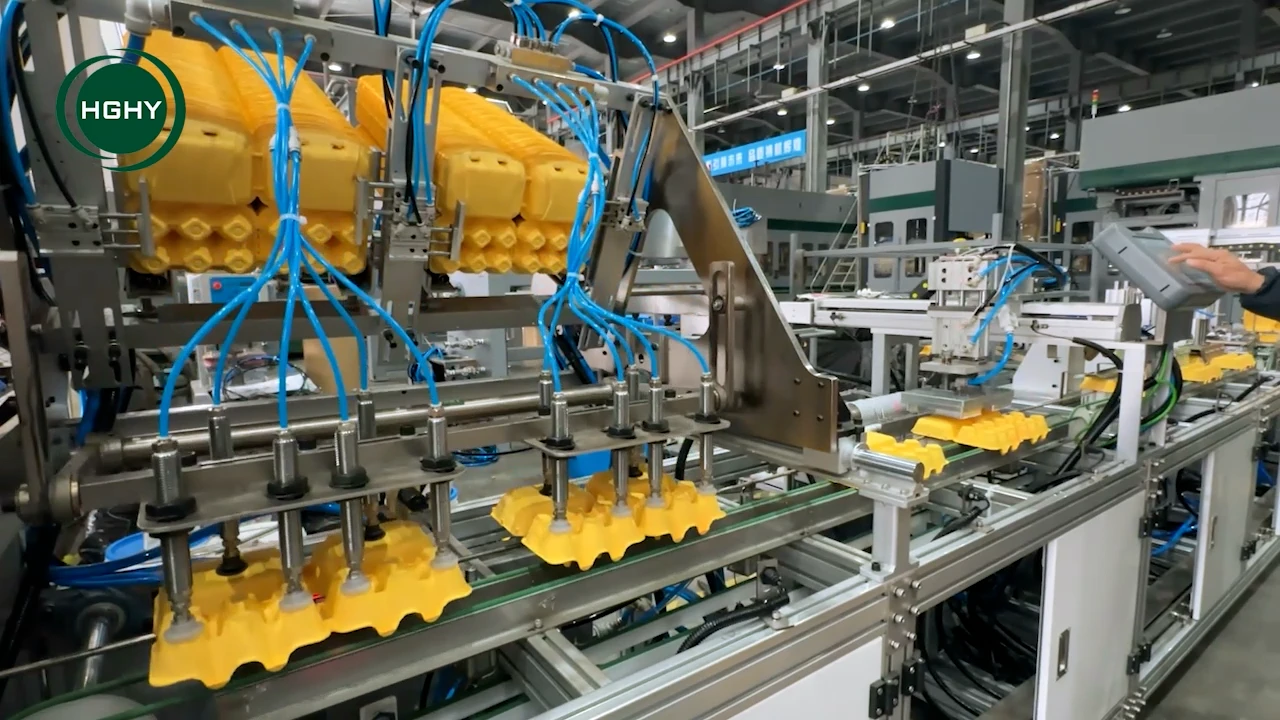
The production cycle begins at the input hopper, where a stack of empty egg cartons waits to be processed. An automatic feeding and separating system picks cartons one at a time from the bottom or top of the stack using vacuum suction cups, friction belts, or mechanical fingers, depending on the machine design. The key engineering challenge here is reliable single-carton separation: molded pulp cartons have textured surfaces that can adhere to each other, especially in humid environments. Machines designed specifically for pulp cartons use slightly higher suction force and separation guides that prevent double-feeding.
On fully automatic lines, the hopper feeds continuously, with sensors monitoring stack height and triggering an alert or automatic conveyor top-up when the supply runs low. Some machines are configured with dual hoppers that allow one to be refilled while the other continues feeding, eliminating the need to pause the line during restocking.
Stage 2 — Conveyor Transport and Positioning
Once separated, each carton is placed onto the main conveyor. Servo-driven indexing conveyors are the current standard for precision labeling applications — servo motors allow exact speed and position control, so the carton arrives at the labeling station at a known location every cycle. Simpler machines use continuous-run belt conveyors with fixed stop pins; these are reliable but offer less flexibility when running cartons of different lengths in the same session.
Side guides or lane rails keep the carton aligned during transport, preventing lateral drift that would cause label misplacement. For machines handling multiple carton formats — 6-cell, 10-cell, 12-cell, and 18-cell configurations, for example — these guides are adjustable via handwheels or, on higher-end machines, motorized width adjustment controlled from the HMI touchscreen.
Stage 3 — Position Detection and Trigger
A photoelectric sensor or vision camera detects the leading edge of the carton as it approaches the labeling station. This detection signal triggers the label dispensing mechanism with a delay calculated from conveyor speed — so the label is dispensed to land precisely at the target position on the carton surface. The timing delay is calibrated during initial setup and stored in the machine controller for each product recipe.
More sophisticated systems use machine vision instead of a single photoelectric sensor, particularly when label placement must be referenced to a specific feature on the carton — a registration mark, a window cutout, or the hinge line between lid and base. Vision-triggered dispensing is more expensive but essentially eliminates positional variation caused by carton-to-carton dimensional tolerance.
Stage 4 — Label Dispensing and Adhesive Application
This is where the two main machine categories diverge. The dispensing method depends on the label type and adhesive system the machine is designed around.
In self-adhesive (pressure-sensitive) sticker labeling machines, labels arrive pre-coated on a release liner roll. The roll feeds through a dispensing head where a peel plate — a sharp-edged plate over which the liner bends at an acute angle — causes the label to separate from the liner and extend forward, ready to be applied. The liner, now empty, rewinds onto a take-up spool. No separate adhesive application is needed. These machines are clean, fast, and easy to set up for different label stocks.
In cold glue (wet glue) labeling machines, labels are supplied in pre-cut stacks in a magazine. A label-picking mechanism — typically a rubber vacuum drum or suction pad — lifts the top label from the magazine and passes it across a glue roller, which applies a thin, even coat of cold adhesive to the back face. The glued label is then transferred onto the carton surface. Cold glue machines handle a wider range of paper label stocks, including heavier grammage materials that can’t be wound onto rolls, and tend to produce very strong adhesion on rough pulp surfaces.
Stage 5 — Label Application and Pressure Bonding
The label is pressed onto the carton surface using a roller, flat pad, or air-blow applicator. Roller applicators apply progressive pressure along the label length, working out air bubbles and ensuring full contact across the adhesive face. This is the preferred method for flat-surface labeling on the top of cartons. Tamp-pad applicators use a pneumatic cylinder to press the label straight down onto the carton, suited for applications where the label must land on a slightly recessed or irregular surface.
Pressure bonding time is brief — typically a fraction of a second — but it determines final adhesion strength. On cold glue systems, the carton must not be stacked or compressed immediately after labeling, as the adhesive needs a short dwell time to reach full bond strength. On PSL systems, the label is ready to handle essentially immediately after the roller passes.
Stage 6 — Verification and Auto-Stacking
After labeling, a detection sensor confirms that a label is present on the carton. Basic machines use a reflective sensor that checks for label material; more capable machines use a vision system that also verifies label orientation and readable barcode data. Cartons that fail the check are diverted to a reject lane rather than continuing to the stacking station.
The automatic stacking system collects labeled cartons and forms them back into a neat stack at a defined count, ready for downstream boxing or palletizing. Stacking is synchronized with conveyor speed to avoid carton-to-carton impacts. The counted and stacked output connects directly to the next stage of the packing line without manual intervention.
Types of Egg Carton Labeling Machines
| Type | How it works | Best for | Speed range |
|---|---|---|---|
| Manual / tabletop | Operator places carton; machine dispenses and applies label on trigger | Small farms, startups, <500 cartons/day | 100–300/hr |
| Semi-automatic | Operator feeds cartons; machine handles labeling and partial stacking | Mid-scale operations with variable SKUs | 400–800/hr |
| Fully automatic (cold glue) | Integrated hopper feed, conveyor, cold glue applicator, auto-stack | Pulp carton lines, high-volume steady production | 800–1,500/hr |
| Fully automatic (PSL / self-adhesive) | Roll-fed label dispenser, servo conveyor, vision-triggered, auto-stack | Plastic carton lines, frequent label changeover | 1,200–2,500+/hr |
| Print-and-apply | Integrated thermal printer generates label on demand, then applies it | Operations requiring variable data per carton (traceability, lot codes) | 600–1,200/hr |
Key Technical Specifications to Evaluate
Throughput per hour is the headline figure, but it needs to be read alongside duty cycle — whether the machine can sustain that rate continuously or only in bursts. Ask manufacturers for verified sustained throughput over a four-hour run, not peak theoretical speed.
Label placement accuracy is typically quoted as ±1mm on good machines. For cartons destined for retail display where label position affects shelf appearance, this tolerance matters. For trays going directly into wholesale cases, slightly wider tolerance may be acceptable.
Carton format compatibility is especially important for operations running multiple pack sizes. Machines that support 6+6, 10, 12, and 18-cell cartons via adjustable guides and stored product recipes reduce changeover time significantly. Quick-change systems that require no tools should be the minimum expectation for operations running more than one SKU.
Electrical compatibility covers both voltage and frequency. Most commercial machines operate across 110–240V at 50 or 60Hz, which simplifies deployment in different regional markets. Verify this specification before purchase if the machine will eventually be relocated or the facility power infrastructure is non-standard.
Why Automated Labeling Matters for Egg Producers
Regulatory Compliance and Traceability
Food safety regulations in most markets require egg cartons to carry specific information: producer identification, grading details, pack date, best-before date, and increasingly a traceable lot code. In the EU, EU regulation 589/2008 specifies exactly what must appear on egg packaging and how it must be formatted. In the US, USDA shell egg grading standards require grade and size marking on every consumer package. These requirements are not optional, and enforcement has tightened.
Manual labeling introduces variation — an operator placing 6,000 labels in a shift will misalign, skip, or double-apply labels at a rate that creates both compliance exposure and rework cost. Automated labeling controls the error rate to under 0.5%, far below the 3–8% range typical of manual operation. For operations subject to third-party audits or retailer compliance checks, consistent machine-applied labeling is increasingly a prerequisite, not just an efficiency gain.
Production Speed and Labor Reduction
A manual labeling worker applying labels to stacked cartons manages roughly 300 cartons per hour under sustained conditions. A semi-automatic system reaches 400–800 per hour. A fully automatic machine runs at 800–1,500 cartons per hour — or faster on PSL systems — with zero direct labor at the labeling station once the machine is loaded and running.
At a large-scale operation running 10,000+ cartons per day, the labor cost difference between manual and fully automatic labeling is substantial. Operations that have made the switch report eliminating two to three dedicated labeling positions per shift, with payback periods typically ranging from 12 to 24 months depending on machine cost and local labor rates.
Brand Consistency at Scale
For branded egg producers supplying supermarkets, label placement consistency affects how the product looks on-shelf. Retail buyers increasingly specify label position tolerances in their supplier requirements. A machine that consistently places the label within ±1mm of target position across 100,000 cartons gives the buyer — and ultimately the consumer — a uniform brand presentation that manual labeling can’t reliably deliver.
Integration with the Egg Packing Line
An automatic egg carton labeling machine doesn’t operate in isolation. In most facilities, it sits downstream of the egg washing and grading line, receiving empty or filled cartons and returning labeled product to the outfeed conveyor for boxing or palletizing. The key integration considerations are conveyor height compatibility, throughput matching, and electrical control handshaking.
Conveyor height on the labeling machine inlet must match the height of the upstream packing machine outfeed to avoid manual carton transfers between stages. Most manufacturers offer adjustable leg frames that accommodate standard line heights (typically 850–950mm working height). Throughput matching means the labeling machine’s sustained output rate equals or exceeds the upstream packer’s output — a labeling machine that falls 10% short in throughput creates a bottleneck that limits the entire line.
Electrical integration typically involves a start/stop signal from the upstream packer to the labeling machine controller, so both run at the same rate and the labeling machine pauses when the packer pauses. Higher-level integration uses a line controller or SCADA system to manage the full packing cell, with production data — carton counts, label usage, fault logs — reported to a central system for production reporting and maintenance scheduling.
Maintenance and Common Fault Points
Reliable production from a labeling machine depends on a consistent maintenance routine. The most common fault points on egg carton labeling machines are predictable, which means they’re preventable with the right schedule.
Glue system fouling is the most frequent issue on cold glue machines. If the glue roller or transfer mechanism isn’t cleaned at the end of each production run, dried adhesive builds up and creates uneven glue application, which leads to labels that peel away in storage or transit. Daily cleaning of the glue circuit with warm water (for water-based cold glues) takes less than 15 minutes and prevents the majority of adhesion failures.
Suction cup wear affects the feeding system performance over time. Suction cups in the carton-separation mechanism flex thousands of times per shift, and the rubber degrades with age and cleaning chemical exposure. Most manufacturers recommend replacing suction cups every 3–6 months as scheduled maintenance, rather than waiting for feeding errors to appear in production.
Sensor drift can cause label misplacement without triggering a fault alarm. A photoelectric sensor that has accumulated dust on its lens may still detect cartons but with a slightly delayed trigger, shifting label position consistently in one direction. Cleaning sensor lenses weekly as part of routine maintenance prevents this mode of degradation.
Conveyor belt wear shows up as inconsistent carton spacing. As the belt stretches and its surface texture degrades, cartons no longer arrive at the labeling station at exactly the expected position. Monitoring belt tension and replacing belts on a scheduled cycle prevents this from affecting production quality.
Frequently Asked Questions
Summary
An automatic sticker labeling machine for egg cartons is a six-stage system — feeding, conveying, detection, dispensing, application, and verification — where each stage must be correctly specified for the carton substrate, label type, and production speed the operation requires. The two main adhesive systems, cold glue and self-adhesive, serve different carton materials and have different tradeoffs in changeover time, label stock flexibility, and adhesion strength on rough surfaces.
For egg producers operating above 3,000 cartons per day, the case for full automation is straightforward: error rates drop from 3–8% to under 0.5%, throughput doubles or triples versus manual labor, and regulatory compliance risk is substantially reduced. The right machine depends on carton format, whether label content is fixed or variable, and how the machine will integrate with upstream and downstream line equipment.
 English
  Spanish
  French
  Thai
Thai