
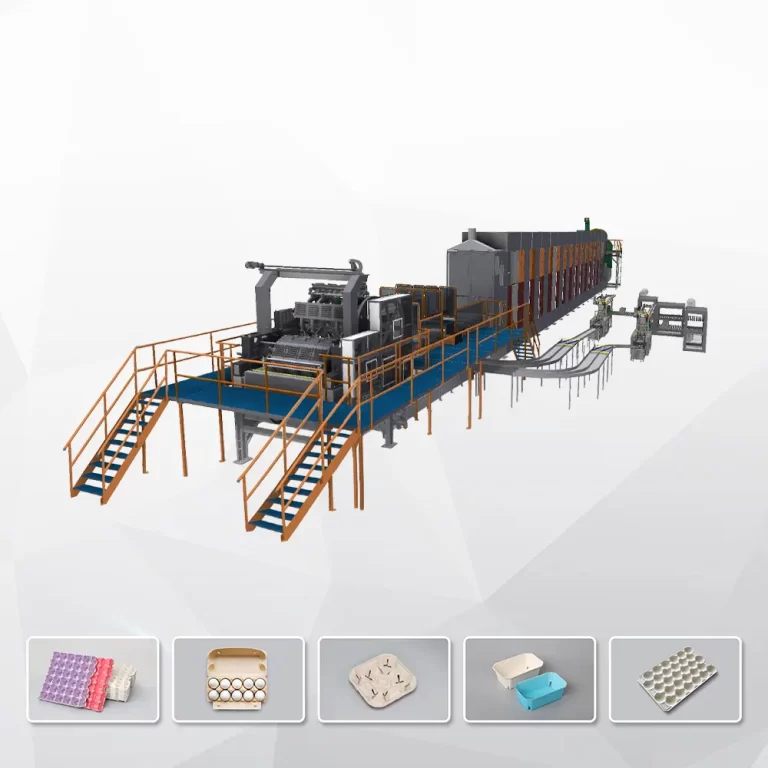
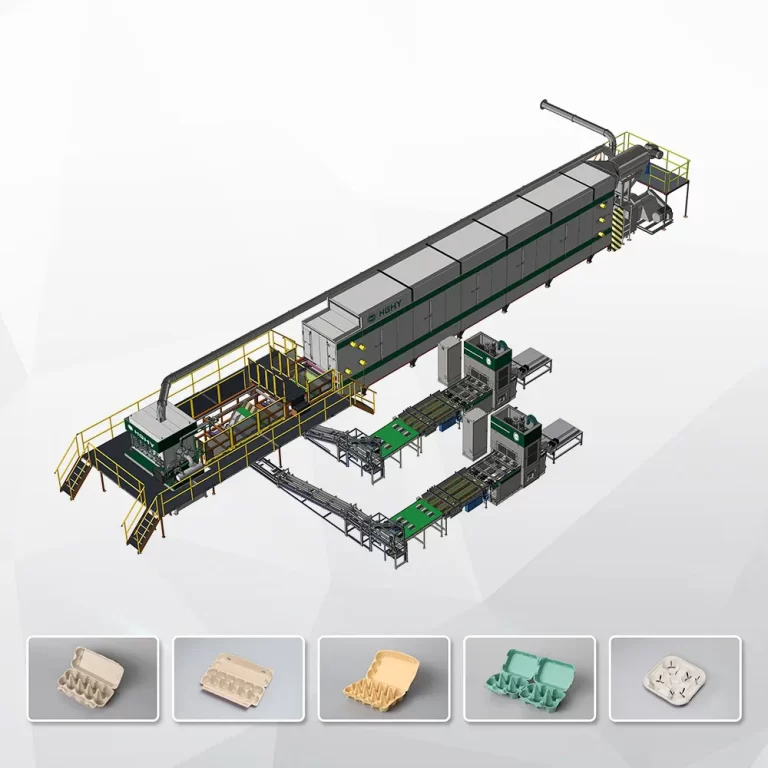
When it comes to egg tray and egg box production, there are significant differences in efficiency, cost, and flexibility between automatic and semi-automatic production lines. Whether you’re new to the industry or already have a stable production line in place, choosing the right production line is crucial for increasing output and ensuring product quality. This article delves into the advantages and disadvantages of automatic versus semi-automatic egg tray production lines and helps you understand how to choose the best option based on your business needs.
1. Overview of Automatic Egg Tray Production Lines
Automatic egg tray production lines use highly automated equipment to complete the entire process, from pulp molding to drying, with minimal human intervention. Automated systems coordinate operations via integrated control systems, reducing human errors during production, while improving speed and product consistency.
- Advantages:
- High Efficiency & High Output: Automated production lines can operate around the clock, producing large quantities of high-quality egg trays.
- Consistency & Quality Control: Since the entire process is automated, the production line ensures highly consistent product quality with minimal variations, unlike manual operations.
- Labor Cost Reduction: The need for fewer operators significantly lowers labor costs, making it ideal for large-scale production facilities.
- Challenges:
- High Initial Investment: The initial cost of automated production lines is relatively high, including equipment purchase, installation, and maintenance.
- Lower Flexibility: Once set up, an automatic production line typically focuses on a specific type of egg tray, meaning it may require additional adjustments if you plan to diversify products.
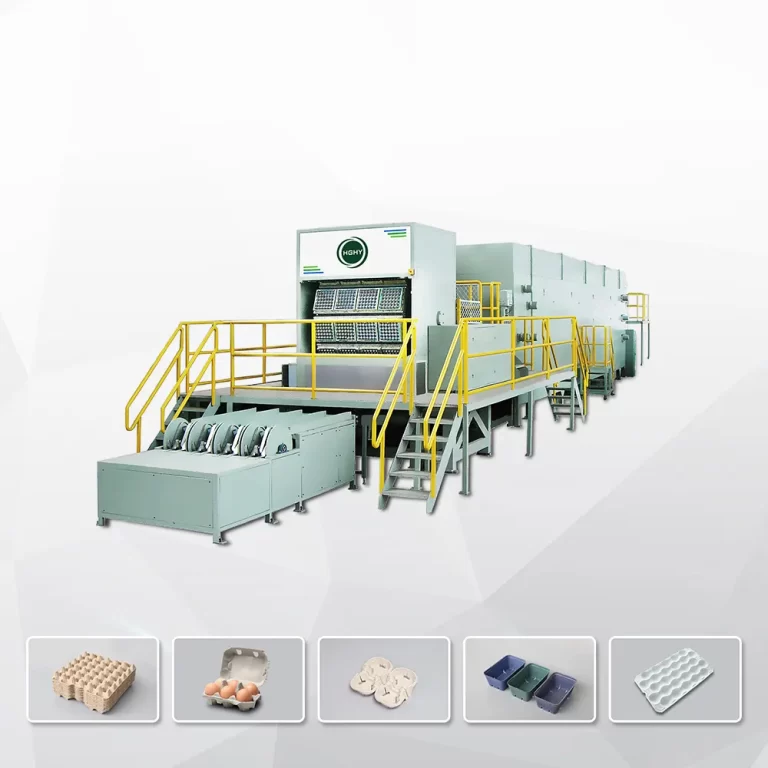
2. Overview of Semi-Automatic Egg Tray Production Lines
Semi-automatic egg tray production lines combine manual labor and mechanical automation, with human involvement in certain processes such as pulp input and mold changes. This production line is typically suited for small to medium-sized production plants.
- Advantages:
- Higher Flexibility: Semi-automatic lines are generally easier to adjust and set up, making them ideal for producing different types of egg trays or custom orders in small batches.
- Lower Initial Investment: Compared to fully automated lines, semi-automatic production lines require a lower initial investment, making them suitable for companies with limited budgets.
- Lower Maintenance Costs: Since manual labor still plays a significant role in the production process, the maintenance costs are generally lower.
- Challenges:
- Lower Production Efficiency: Compared to automatic production lines, semi-automatic lines typically have a slower production rate, which might not meet the demand for high volumes.
- Higher Labor Costs: While the initial investment is lower, semi-automatic lines require more manual labor, which can increase long-term labor costs.

3. How to Choose Based on Your Needs?
When selecting between automatic and semi-automatic egg tray production lines, businesses need to consider factors like production volume, budget, market position, and future growth. Here are some tips:
- Ideal for Automatic Production Lines:
- If you plan to produce at a large scale with high demand, an automatic production line is your best option. It enables fast, large-volume production with consistent quality.
- If you have a substantial budget and aim to reduce long-term labor costs, an automatic production line will bring higher returns in the long run.
- Ideal for Semi-Automatic Production Lines:
- If you’re a small to medium-sized business with lower production volumes and budget constraints, a semi-automatic line is a more cost-effective choice.
- If you have a diverse product range and fluctuating demand, semi-automatic lines offer more flexibility and adaptability.
4. Connection to the Main Topic
In the article “The Complete Guide to Pulp Egg Tray & Egg Box Production Lines”, we explore various types, technologies, and best practices for egg tray and egg box production lines. Whether you choose an automatic or semi-automatic production line, the insights provided in that guide can help you optimize your production process, select the right equipment, and enhance efficiency. This subtopic offers a more detailed perspective to guide your decision-making when it comes to choosing between automatic and semi-automatic lines.
