

The Complete Guide to Pulp Egg Tray & Egg Box Production Lines
Establishing an egg tray production line in Tunisia has become an increasingly attractive opportunity for investors seeking to expand into the North African market. As detailed in The Complete Guide to Pulp Egg Tray & Egg Box Production Lines, molded-pulp packaging offers high profitability, flexible production capacity, and strong global demand—advantages that align perfectly with Tunisia’s strategic geographic position, growing agricultural sector, and export-oriented economy.
This subtopic focuses specifically on regional feasibility, investment considerations, market opportunities, and technical setup for launching a pulp egg tray production line in Tunisia, while staying fully connected to the principles and technical frameworks explained in the main guide.
1. Why Tunisia Is an Ideal Location for Egg Tray Manufacturing
1.1 Strategic Access to Europe, MENA & West Africa
Tunisia serves as a natural export bridge between:
- Southern Europe (Italy, France, Spain)
- Mediterranean markets
- North & West Africa (Algeria, Libya, Morocco, Mauritania)
This allows manufacturers to produce locally while exporting efficiently, especially lightweight molded-pulp products such as:
- 30-cell egg trays
- Egg cartons/boxes
- Cup carriers
- Fruit trays
- Industrial molded-pulp packaging
Shipping costs are relatively low due to proximity, making Tunisia competitive against Asian suppliers.
2. Market Demand Overview in Tunisia
2.1 Strong Local Egg Industry
According to regional agricultural trends, Tunisia maintains a stable poultry and egg production sector. Local farms increasingly demand:
- 30-cell egg trays
- Egg cartons for retail packaging
- Stackable moisture-resistant trays
This creates an immediate domestic market that supports baseline machine capacity utilization.
2.2 Growing Preference for Eco-Friendly Packaging
As emphasized in the main guide, molded-pulp packaging is:
- biodegradable
- produced from recycled waste paper
- compliant with EU eco-regulations
With Tunisia exporting agricultural and consumer products to Europe, adopting molded pulp helps exporters meet EU packaging compliance standards.
2.3 Import Reduction Opportunity
Many Tunisian distributors still import molded-pulp trays from Turkey, Spain, or China.
Setting up a local production line can drastically reduce:
- cost per unit
- lead times
- currency exchange risks
This creates a large competitive advantage for new entrants.
3. Raw Material Advantage: Easy Access to Waste Paper
Just as explained in The Complete Guide, pulp molding relies heavily on recycled paper. Tunisia has abundant sources including:
- waste cardboard
- used paper packaging
- printing waste
- post-consumer paper
Local collection networks significantly reduce raw material costs, making production highly profitable.
For areas with limited paper supply, pulp can still be sourced from:
- Algeria
- Europe (recycled OCC and ONP)
- Middle Eastern markets
This flexibility ensures continuity of production.
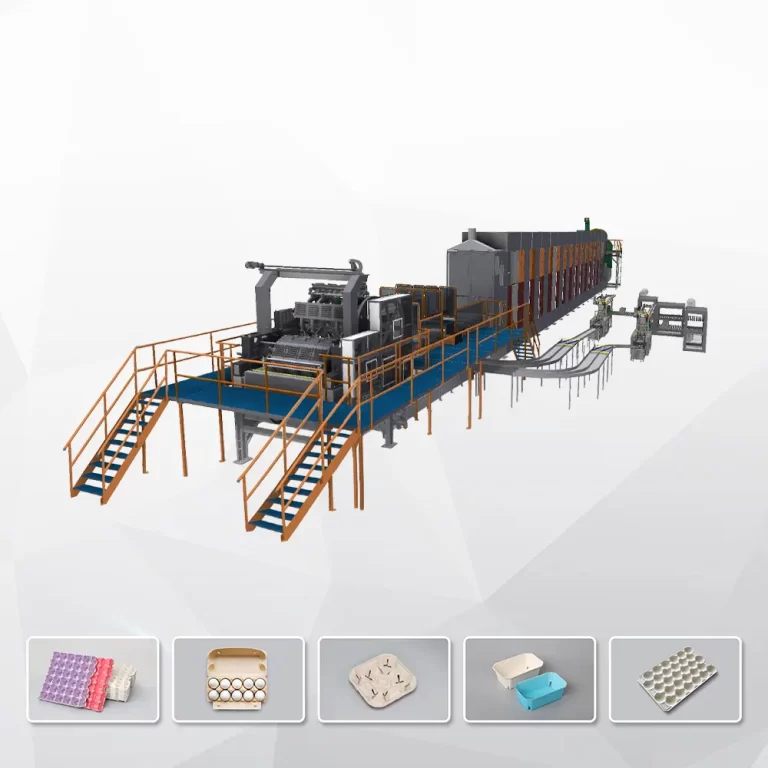
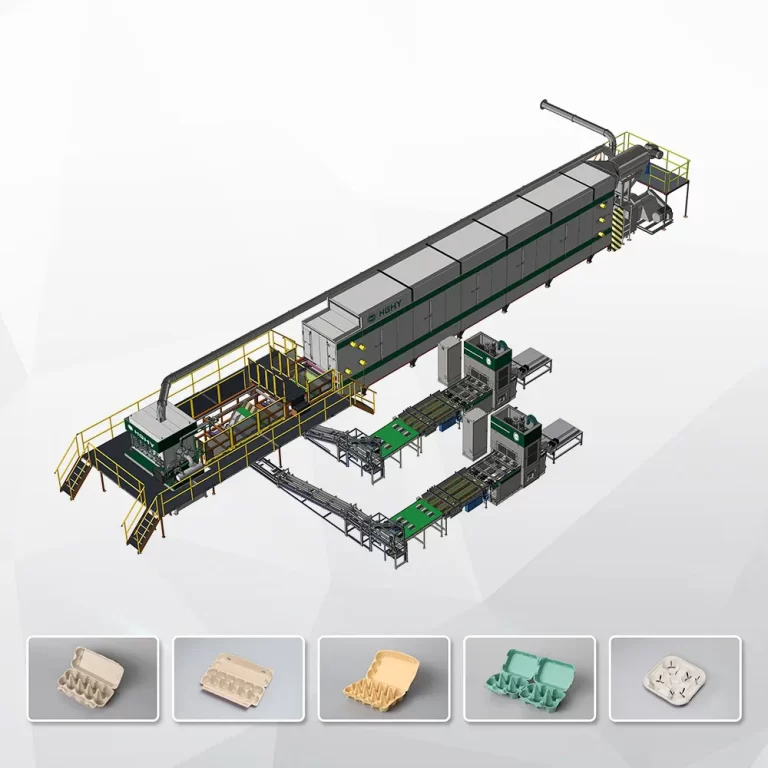
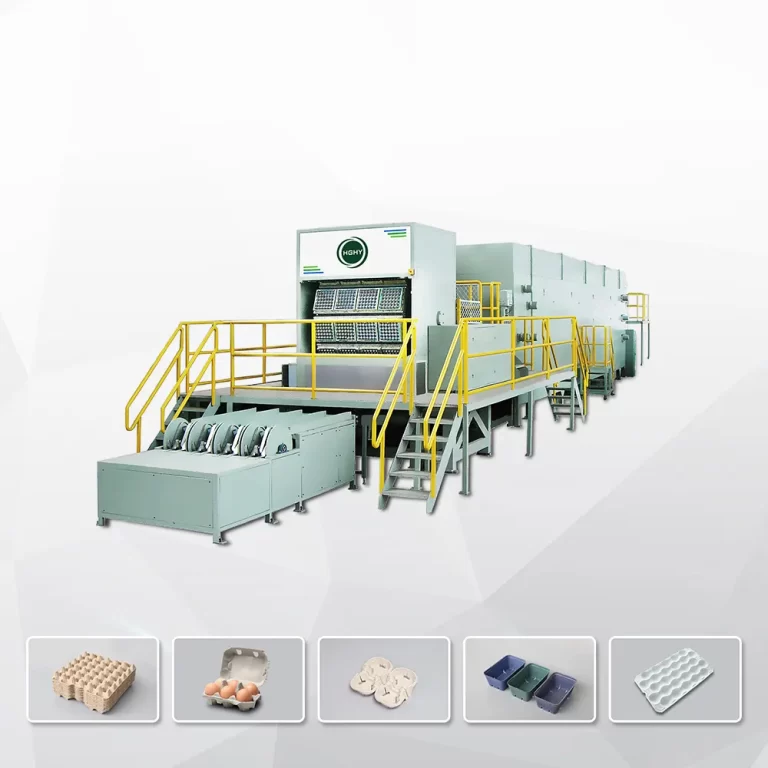
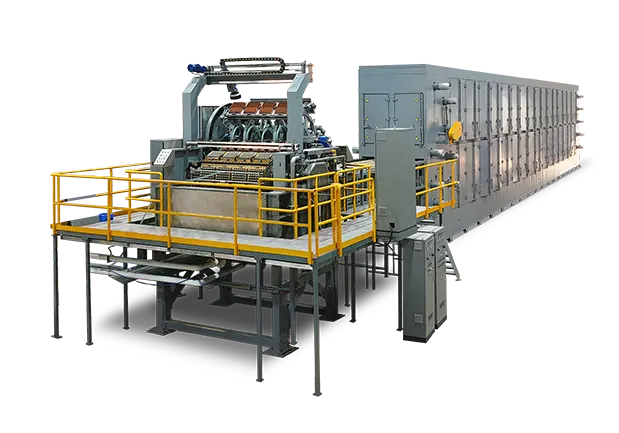
4. What a Standard Egg Tray Production Line Looks Like in Tunisia
To maintain consistency with the main guide, the typical production flow includes:
- Pulping System
Hydrapulper → Pulp refiner → Pulp storage → Mixing tank
(Water-proofing & strength additives optional) - Forming System
Rotary or reciprocating forming machine to shape wet egg trays. - Drying System
Depending on Tunisia’s climate and fuel prices:- Multi-layer metal drying line (most stable)
- Brick dryer (low operating cost, ideal for gas/biomass)
- Natural drying (only feasible for very small outputs)
- Hot-Pressing (Optional)
For premium egg boxes or retail cartons requiring smooth surfaces. - Stacking & Packaging System
5. Recommended Capacities for Tunisian Investors
Based on market studies and the main guide’s capacity recommendations:
| Production Scale | Daily Output | Suitable For |
|---|---|---|
| Small Line | 1,000–2,500 trays/hour | Local farms, small distributors |
| Medium Line | 3,000–5,000 trays/hour | Regional supply, wholesalers |
| Large Line | 6,000–10,000 trays/hour | Export-driven manufacturers |
For export strategies targeting Algeria, Libya, and Southern Europe, the 6,000–10,000 trays/hour line offers the best ROI.
6. Energy Considerations in Tunisia
Tunisia’s energy landscape supports multiple heating methods discussed in the main guide:
6.1 Natural Gas
Common in industrial zones
→ Most stable & cost-efficient
→ Ideal for multi-layer metal dryers
6.2 Diesel or LPG
Reliable alternatives for areas without gas pipelines.
6.3 Biomass (Olive residues, agricultural waste)
Tunisia produces large amounts of biomass, making it possible to run:
- brick dryers
- hybrid heating systems
with extremely low operating cost.
7. Labor, Industrial Land & Government Incentives
7.1 Labor Costs
Manufacturing labor is affordable and skilled, supporting efficient operation.
7.2 Industrial Zones
Government-supported zones provide:
- easy project approval
- access to logistics
- energy connections
- business tax advantages
7.3 Investment Incentives
Foreign investors may receive incentives under:
- Tunisia Investment Law
- industrial development programs
- export-oriented enterprise programs
This reduces initial investment burdens and speeds up ROI.
8. Export Strategies: Turning Tunisia into a Pulp Packaging Hub
With the right production setup, Tunisia can supply:
8.1 North African Markets
- Libya (high demand, limited local production)
- Algeria (large egg production sector)
- Morocco & Mauritania
8.2 Southern Europe
Especially:
- Italy
- Malta
- France
for retail packaging, fruit trays, or premium egg boxes.
8.3 Middle Eastern Markets
GCC countries prefer imported molded pulp due to limited paper recycling infrastructure.
Tunisia’s shipping costs are significantly lower compared to Asia → making it highly competitive.
Conclusion
Setting up an egg tray production line in Tunisia is a strategic, high-return investment that benefits from:
- strong local demand
- proximity to export markets
- affordable raw materials
- supportive industrial policies
- rising global need for eco-friendly molded-pulp packaging
By applying the technical principles and production frameworks outlined in The Complete Guide to Pulp Egg Tray & Egg Box Production Lines, investors can confidently build a scalable, competitive, and export-oriented production operation in Tunisia.
