
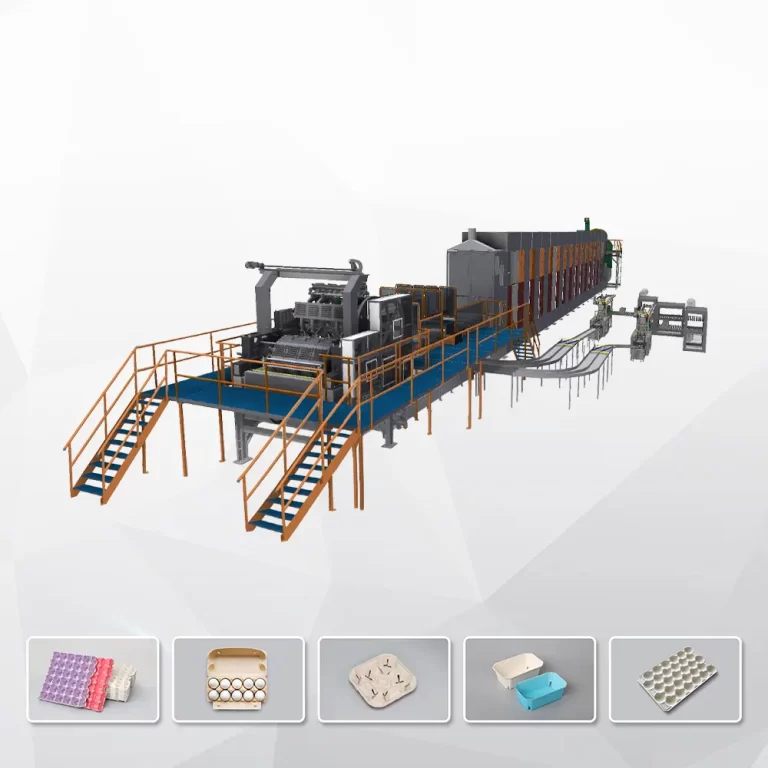
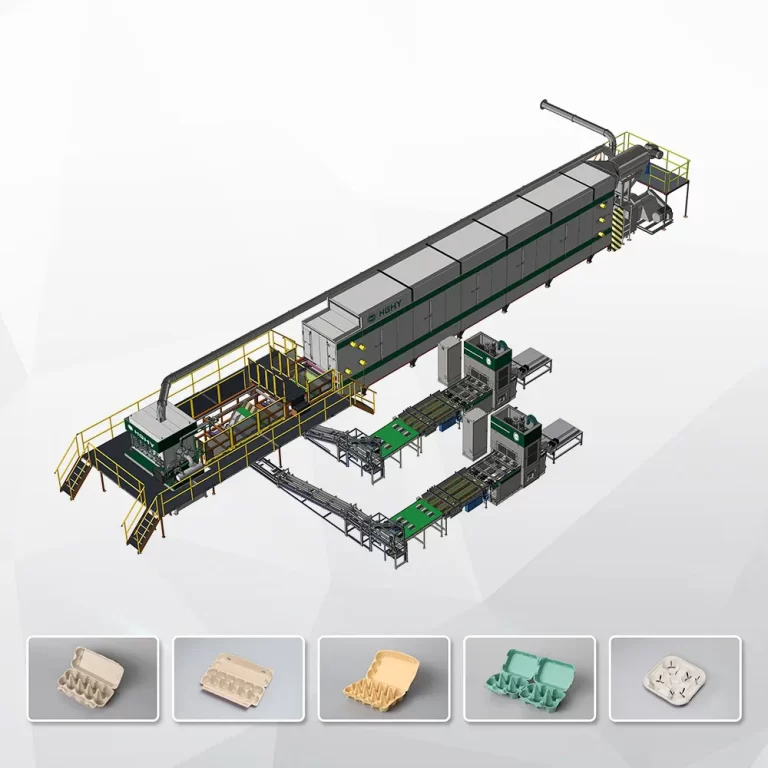
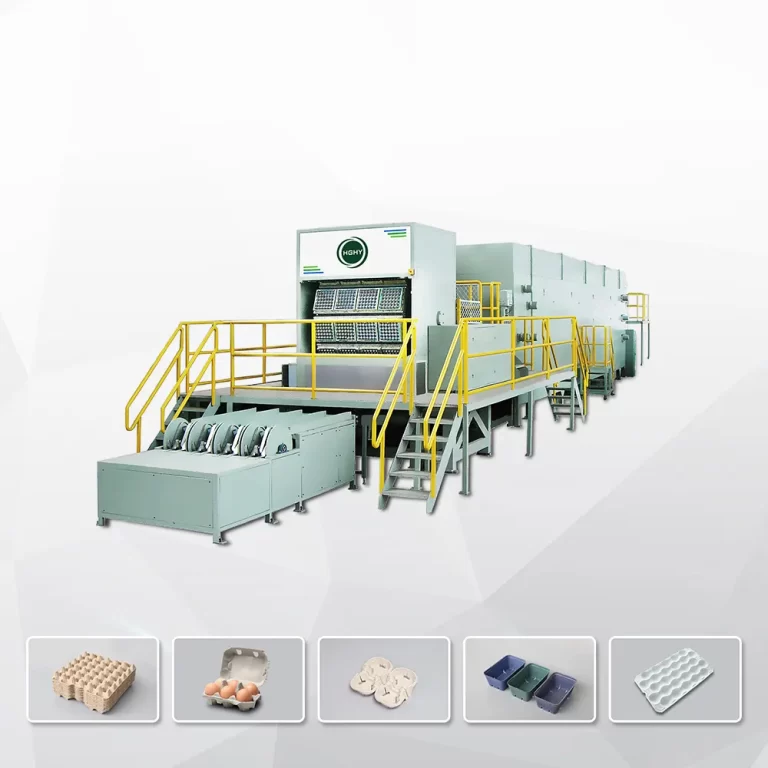

As covered in The Complete Guide to Pulp Egg Tray & Egg Box Production Lines, modern molded-pulp technology has evolved into a high-efficiency, low-waste manufacturing system capable of producing durable egg trays, egg cartons, and industrial protective packaging. Building on this foundation, this article explains why choosing eco-friendly egg packaging is not only environmentally responsible but also commercially profitable—and why more producers, investors, and farms worldwide are shifting to pulp-molded solutions.

1. Explosive Global Demand for Sustainable Packaging
Governments, retailers, and consumers are rapidly moving away from plastic foam packaging. Egg packaging is one of the earliest segments where this transition is occurring because:
- Eggs require breathable packaging—pulp naturally meets this without additional processing.
- Retailers prefer recyclable and biodegradable materials.
- Sustainability is now a purchasing decision factor across the food industry.
This rising demand ensures a stable, long-term market, making investment in pulp egg tray & egg box production lines highly secure.
2. Lower Material and Production Costs
As highlighted in the main guide, pulp production lines use recycled paper—one of the most cost-efficient raw materials available. Compared with plastic or foam:
- Raw material cost is 50–70% lower.
- No petrochemical cost fluctuations.
- Waste pulp is fully reusable within the system.
- Finished products require minimal post-processing.
This results in consistent margins and enables manufacturers to scale without facing unpredictable material costs.
3. Higher Market Selling Price for “Eco-Friendly” Products
While pulp egg trays are inexpensive to produce, their market value is increasing due to sustainability trends:
- Retailers are willing to pay a premium for green packaging.
- Many countries offer incentives for environmentally friendly products.
- “Eco-friendly” labeling increases product competitiveness.
- Organic farms and premium egg brands prefer molded pulp packaging.
This allows producers to capture higher unit profits with minimal additional cost.
4. Simple, Stable, and Low-Risk Production Operations
According to the main guide, a modern pulp egg tray & egg box production line offers:
- Automated pulp preparation
- High-speed rotary or reciprocating molding
- Integrated drying systems
- Intelligent control and energy optimization
This automation dramatically reduces labor requirements and operational errors. The result is:
- Lower labor cost
- Higher daily capacity
- Faster return on investment
Most investors achieve ROI within 6–18 months, depending on line size and market price.
5. Eco-Friendly Image Strengthens Brand Value
For farms, distributors, and packaging manufacturers, using plant-fiber packaging improves brand perception:
- Enhances corporate environmental responsibility
- Meets sustainability commitments for retail partners
- Aligns with global ESG requirements
- Helps brands enter premium supermarket channels
This intangible value further accelerates profit growth.
6. Long-Term Compliance with Environmental Regulations
Countries are tightening restrictions on:
- Plastic foam packaging
- Non-recyclable materials
- High-carbon manufacturing processes
Investing early in pulp packaging ensures your production line remains compliant for the next decade or more, avoiding costly transitions or sudden shutdowns. Environmental compliance is becoming a competitive advantage rather than merely an obligation.
7. Flexible Product Range Expands Revenue Streams
The same production infrastructure described in the main guide can produce:
- Egg trays
- Egg boxes (6/10/12/30 egg cartons)
- Fruit trays
- Cup carriers
- Industrial protective packaging
This versatility allows manufacturers to diversify revenue and respond quickly to market demands without adding major equipment.
Conclusion: Eco-Friendly Egg Packaging Is a Profitable, Future-Proof Investment
When viewed alongside The Complete Guide to Pulp Egg Tray & Egg Box Production Lines, it becomes clear that investing in sustainable pulp egg packaging is profitable because it combines:
- Low material cost
- High global demand
- Premium selling price
- Strong environmental positioning
- Stable operations with fast ROI
- Long-term regulatory compliance
For new investors, farms upgrading their packaging, and manufacturers expanding into sustainable products, molded pulp egg packaging offers one of the highest-value opportunities in today’s circular economy.
 English
  Español
  Français
  ไทย
ไทย