
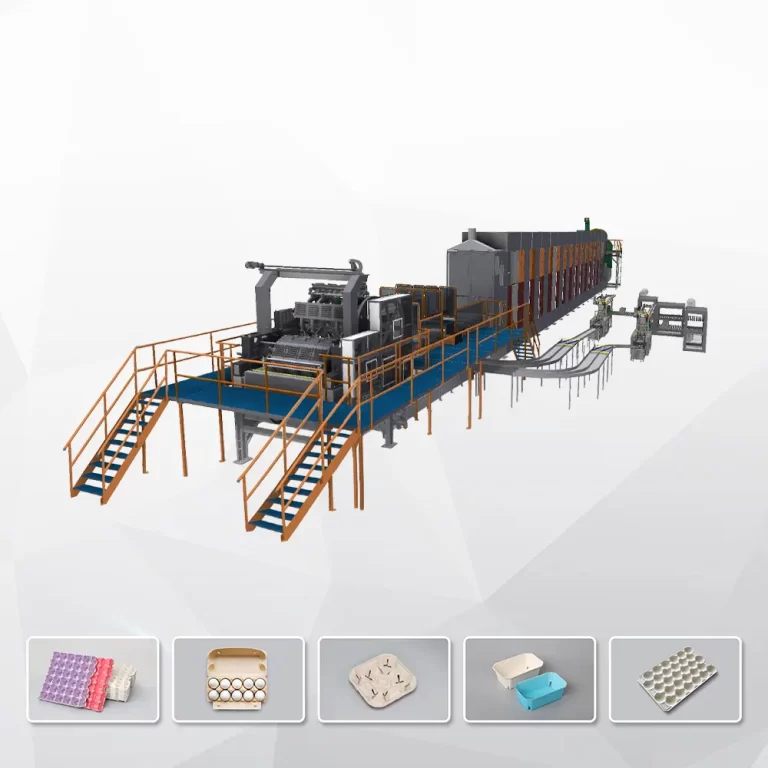
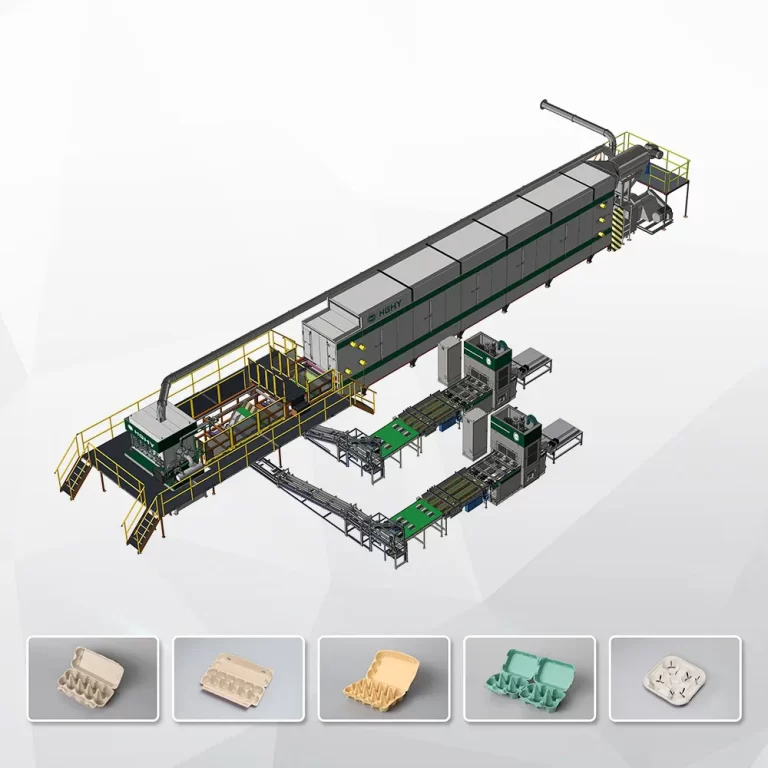
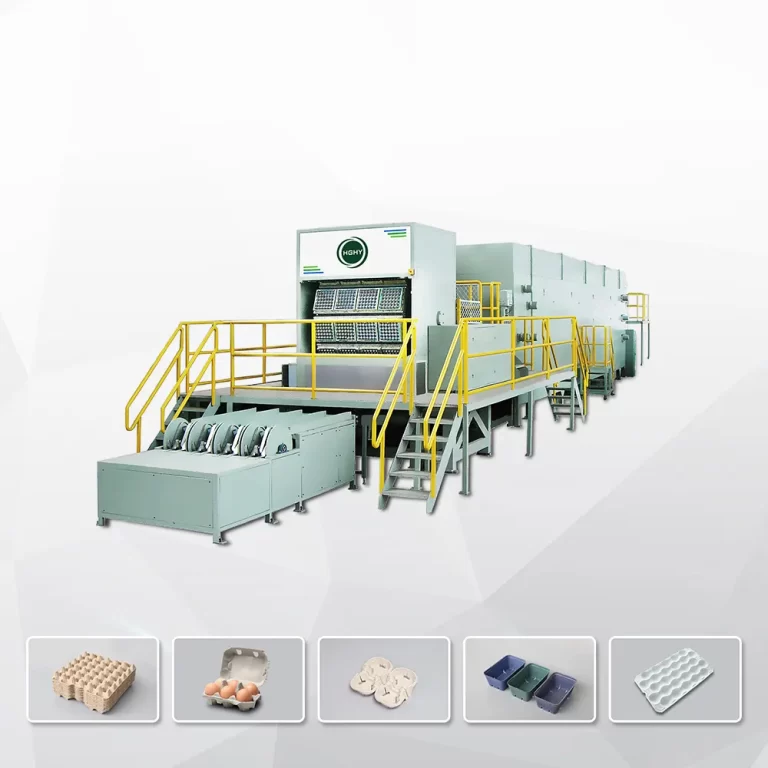

In the pulp molding industry, waste paper is the fundamental raw material used to manufacture egg trays, egg boxes, and other biodegradable packaging products. Choosing the right type of waste paper is critical—not only for achieving strong, durable, and smooth egg trays but also for reducing production costs and improving overall efficiency. This guide explains the best waste paper materials for egg tray production, their characteristics, and how to mix them effectively for optimal pulp quality.

1. Overview: Why Waste Paper Quality Matters
The quality of waste paper directly determines the strength, surface finish, and water resistance of molded pulp egg trays.
Poor-quality waste paper can lead to:
- Weak or easily deformed trays
- Uneven color or surface roughness
- Higher fiber loss during pulping
- Increased maintenance and downtime
To produce premium egg trays—especially those intended for export markets—it’s essential to use clean, high-fiber waste paper with minimal impurities such as plastic film, tape, and dust.
2. Recommended Types of Waste Paper
(1) Old Corrugated Cartons (OCC)
- Composition: Mainly long-fiber kraft paper
- Advantages: Excellent strength and rigidity; provides strong structural integrity
- Ideal Use: Suitable for producing high-strength egg trays and industrial packaging
- Tip: Avoid overused or oil-stained cartons, as they reduce pulp bonding quality.
(2) Old Newspapers (ONP)
- Composition: Short and fine fibers
- Advantages: Produces smooth surface and uniform texture; good for printing-quality trays
- Ideal Use: Best for egg boxes or retail packaging that require clean appearance
- Tip: Use in combination with OCC (60% OCC + 40% ONP) to balance strength and smoothness.
(3) Book and Office Paper Waste
- Composition: Refined cellulose fibers with low lignin content
- Advantages: High brightness and cleanliness; improves color uniformity and pulp refinement
- Ideal Use: For white or light-colored egg trays and food packaging applications
- Tip: Remove coated or glossy paper, which can block the vacuum holes during molding.
(4) Recycled Egg Trays and Boxes
- Composition: Mixed short fibers from recycled pulp
- Advantages: Cost-effective and easy to process; high absorption rate
- Ideal Use: Secondary material for general-grade egg trays (local market use)
- Tip: Avoid repeated recycling cycles (more than 3–4 times) to prevent fiber degradation.
(5) Mixed Office Waste (MOW)
- Composition: Blend of copier paper, envelopes, and printed sheets
- Advantages: Balanced fiber length, good whiteness, easy pulping
- Ideal Use: For medium-grade egg trays that require strength and color balance
- Tip: Screen carefully to remove plastic coatings or adhesive residues.
3. Waste Paper Mixture Ratio Recommendation
For most pulp egg tray production lines, the following ratio achieves the best balance between strength, appearance, and cost:
| Type | Ratio (%) | Purpose |
|---|---|---|
| OCC (corrugated carton) | 60–70% | Provides main structure and strength |
| ONP (newspaper) | 20–30% | Improves surface smoothness |
| Book/Office Paper | 5–10% | Enhances brightness and uniform texture |
| Recycled Egg Trays | 0–10% | Used as filler to reduce cost |
⚙️ Pro Tip: Always adjust the ratio based on the product type (egg tray vs. egg box) and drying method. For hot-press systems, use less newspaper to avoid fiber over-softening.
4. Factors to Consider When Selecting Waste Paper
- Cleanliness: Avoid oil stains, plastic coatings, and tape residues.
- Fiber Length: Long fibers (from OCC) improve strength; short fibers (from ONP) enhance surface texture.
- Moisture Content: Keep moisture below 12% to prevent pulping inefficiency.
- Ash and Filler Content: High ash levels reduce bonding strength and increase waste.
- Local Availability: Choose paper types that are easy to source locally for stable long-term operation.
Selecting the best waste paper for egg tray production is not only about cost reduction—it’s a science of fiber optimization and process stability.
A good mix of OCC, ONP, and office paper ensures high-quality pulp, reduces maintenance frequency, and extends mold life. For factories focusing on export-grade egg trays or branded egg boxes, investing in clean, consistent waste paper sources is key to maintaining a competitive advantage in the growing global market for sustainable packaging.
 English
  Español
  Français
  ไทย
ไทย