
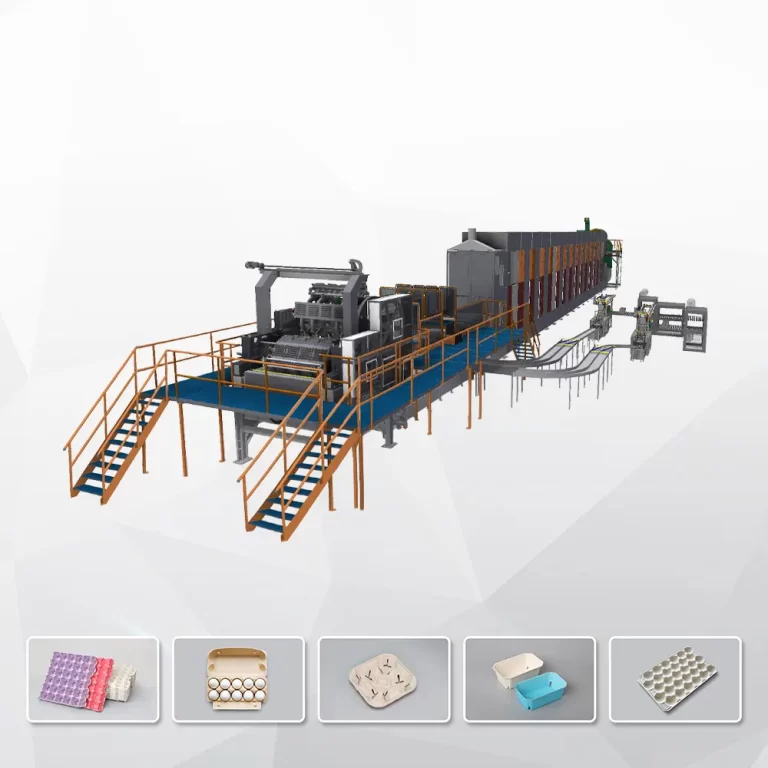
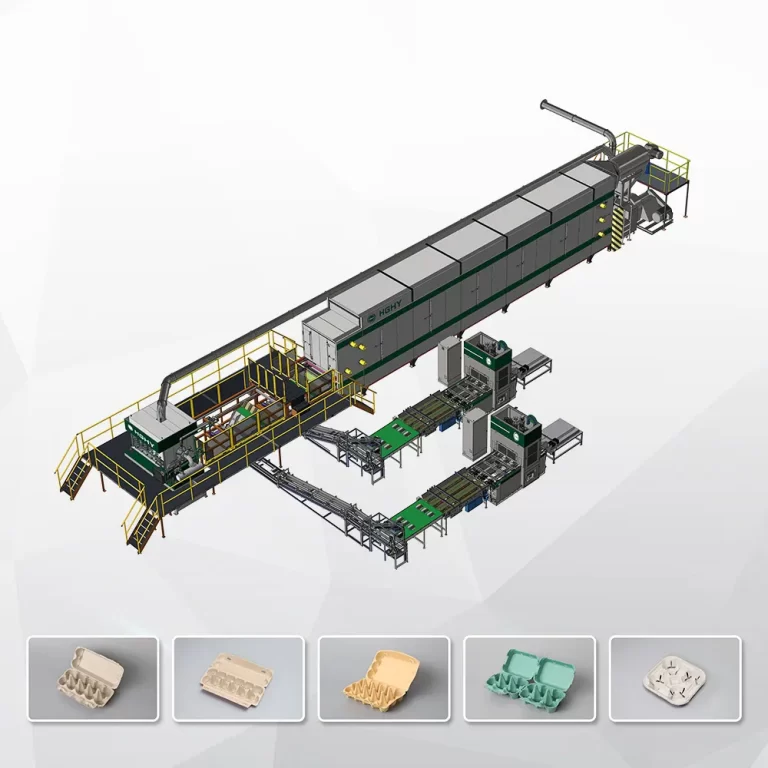
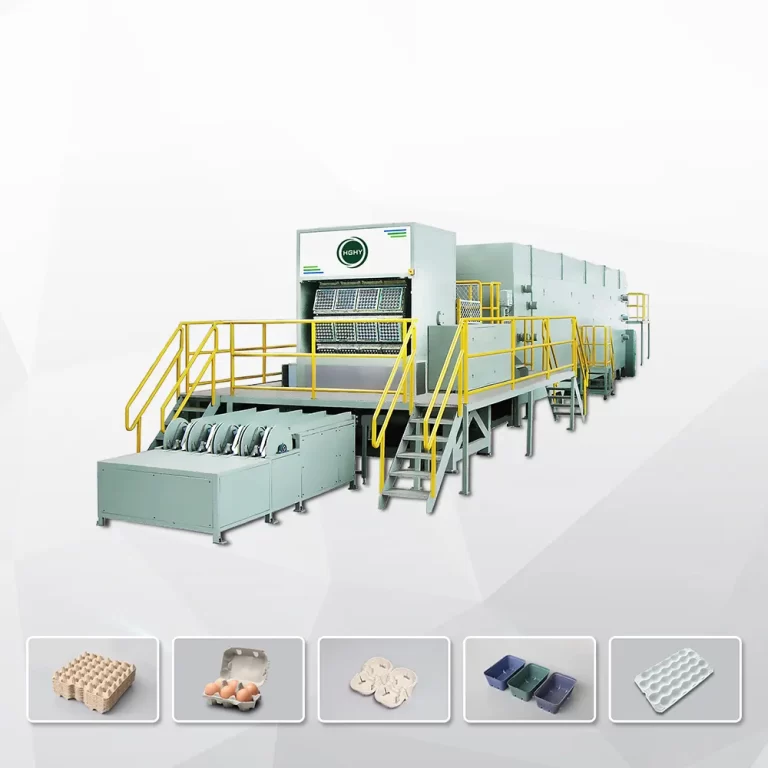

A customer in Ghana has received an HGHY egg tray making machine, marking the start of the next phase: site preparation, installation, commissioning, and operator training. For any egg-tray project, equipment arrival is an important milestone, but it is only the beginning of building a stable pulp-molding operation.
The project is centered on producing protective paper-pulp packaging from recovered paper. By converting suitable paper-based materials into molded egg trays, a production line can support local packaging needs while creating a practical route for paper recycling.
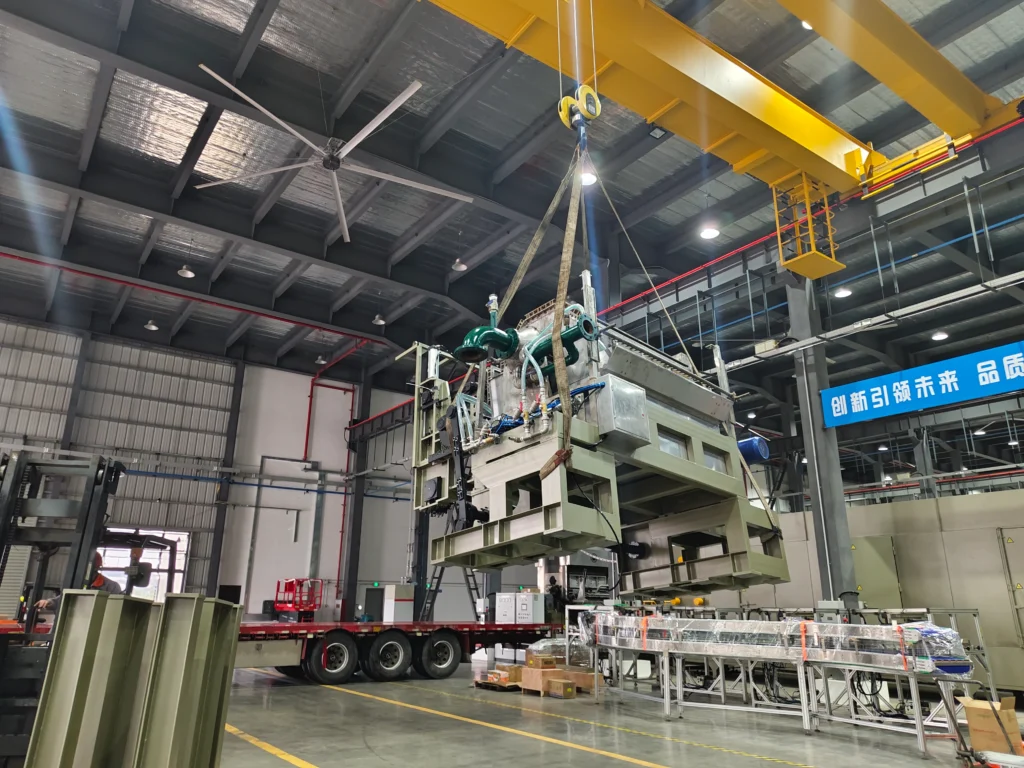
From Delivery to Production Readiness
Once an HGHY egg tray machine arrives on site, the focus should shift from logistics to coordinated project execution. The production process normally moves through five connected stages:
- Pulp preparation — suitable recovered paper is mixed with water and processed into usable pulp.
- Forming — the prepared pulp is shaped through dedicated molds into the required tray design.
- Drying — heat and controlled airflow remove moisture so the trays become stable and ready for handling.
- Finishing — depending on the product requirement, trays may be inspected, trimmed, stacked, and counted.
- Packing — finished trays are prepared for local distribution or for use within an egg-production operation.
A reliable result depends on the balance of the whole system. Pulp quality, water management, mold condition, drying performance, operator practices, and routine maintenance all influence the number of usable trays produced each day.
Why an HGHY Egg Tray Line Fits This Type of Project
HGHY develops pulp-molding equipment for products made from paper fiber, including egg trays and related protective packaging. Its egg tray machines are designed around the core stages of pulping, forming, drying, and stacking, allowing a project to be configured around the intended product and operating conditions.
For a Ghana-based operation, the key advantage of a planned production line is not only the forming machine itself. It is the ability to match the equipment layout to the available factory space, local utilities, target tray format, raw-material supply, and expected production schedule.
HGHY states that it can support project planning, equipment customization, installation, troubleshooting, operator training, and ongoing technical support. These services are especially relevant during the transition from delivered equipment to consistent production.
Installation Should Begin with a Site Checklist
Before installation starts, the project team should confirm that the site is ready for the full line rather than only for the main machine. A practical checklist includes:
| Project area | What should be confirmed |
|---|---|
| Factory layout | Adequate space for pulping, forming, drying, tray handling, raw-material storage, and finished-goods storage. |
| Utilities | Confirmed electrical supply, water availability, drainage, compressed air, and the selected drying energy source. |
| Raw materials | A consistent supply of suitable recovered paper, with basic sorting to limit contaminants that can affect pulping and product quality. |
| Drying conditions | A drying plan that matches the selected line and local operating conditions, so wet formed trays do not become the production bottleneck. |
| Operating team | Designated operators and maintenance personnel available for hands-on training during commissioning. |
| Spare parts | A recommended start-up inventory of essential consumables and wear parts, with clear replacement procedures. |
Completing these items before commissioning helps reduce avoidable delays and gives the production team a stronger basis for stable daily operation.
Turn Recovered Paper into Functional Egg Packaging
The basic value of a pulp-molding project is straightforward: paper-based material is transformed into packaging that protects fragile products during handling, storage, and transport. HGHY describes egg tray production as a process that can use waste-paper materials such as newspapers, cardboard, and office paper, subject to suitable preparation.
The finished tray quality will depend on the mix and cleanliness of the incoming paper, the pulp recipe, the condition of the molds, drying control, and product handling after production. Establishing clear standards at the beginning—tray weight, shape, nesting performance, dryness, and visual appearance—gives the Ghanaian operation practical targets for commissioning and ongoing quality checks.
Focus on Training and Preventive Maintenance
The most productive start-up plans treat operator training and maintenance as part of the equipment investment, not as separate activities. During installation and commissioning, the operating team should learn how to:
- prepare consistent pulp and monitor the water-to-fiber balance;
- inspect molds and keep forming surfaces clean;
- recognize drying issues before they create product defects;
- follow daily lubrication, cleaning, and safety routines;
- track output, rejection reasons, and machine stoppages;
- maintain a basic inventory of critical spare parts.
These daily disciplines help turn an installed egg tray machine into a dependable production asset. They also make it easier to identify whether an issue comes from raw material, utility conditions, process settings, or a component that needs attention.
Build a Practical Path to Stable Output
After the HGHY egg tray making machine is installed, the project should not be judged by a short demonstration run. A more useful target is stable output over repeated shifts, using the recovered paper and utilities that will be available in normal operation.
The commissioning plan should therefore define:
- the intended tray design and acceptable quality standard;
- the agreed raw-material specification;
- a realistic production schedule;
- the drying and stacking arrangement;
- operator roles and maintenance intervals;
- a record of output, defects, and corrective actions during the start-up period.
This disciplined approach gives the Ghanaian customer a clearer route from equipment delivery to a production line that supports day-to-day packaging needs.
FAQ
What can an HGHY egg tray making machine produce?
HGHY describes its pulp-molding equipment as suitable for egg trays and other molded fiber products, depending on the selected molds and line configuration. Product options can include trays used for eggs, fruit, cups, bottles, and protective packaging applications.
What materials can be used for egg tray production?
HGHY identifies paper-based inputs such as old newspapers, cardboard, and office paper as common raw materials for pulp preparation. The actual material mix should be assessed for cleanliness, fiber quality, and suitability for the required finished tray.
What happens after the machine arrives in Ghana?
The next stages are site preparation, installation, utility connection, commissioning, operator training, and quality verification. The line should be assessed over sustained operating shifts rather than only a short trial run.
Why is the drying section important?
Drying removes moisture from formed trays and is essential to product strength, handling stability, and production flow. If drying capacity does not match forming capacity, it can limit the entire line’s usable output.
Does HGHY provide project support?
HGHY states that it provides factory-layout planning, customized equipment support, engineer assistance for installation and troubleshooting, training, and ongoing technical support. The project scope, timing, and responsibilities should be confirmed in writing for each order.
 English
 Spanish
 French
 Thai