
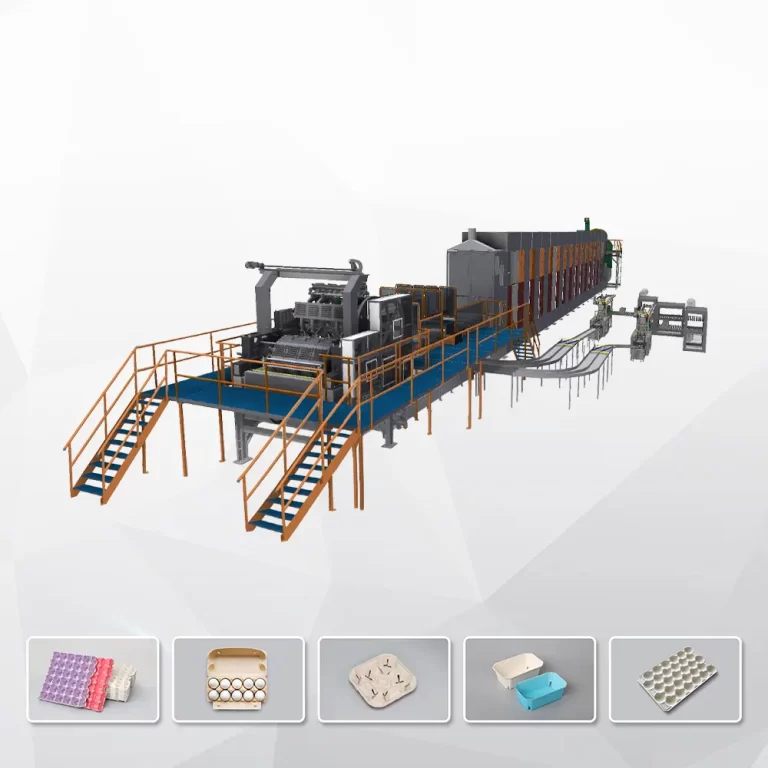

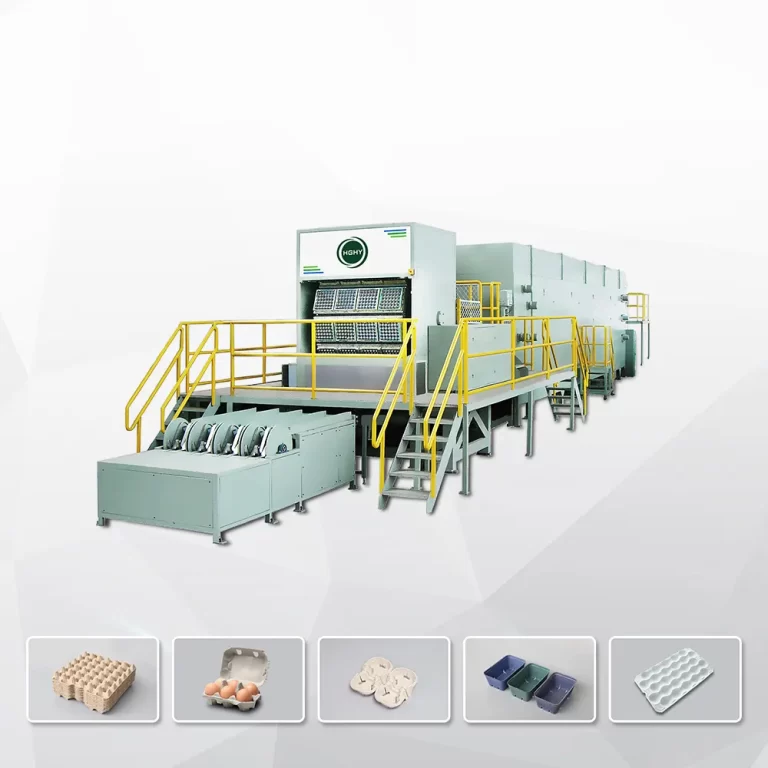

In pulp molding production, pulp concentration plays a decisive role in determining the strength, thickness, and surface finish of egg trays and egg boxes. An improper pulp ratio can cause defects such as weak structure, poor water absorption, or uneven thickness. Therefore, controlling pulp concentration precisely is one of the most crucial steps in achieving stable and high-quality molded pulp packaging.

1. Understanding the Role of Pulp Concentration
Pulp concentration refers to the ratio of solid fiber content to total water volume in the pulp slurry. In egg tray production, the typical range lies between 0.8% and 1.2%, depending on product type and forming method.
- Low concentration (<0.8%): Produces lighter trays but may reduce strength and increase forming time.
- High concentration (>1.2%): Enhances stiffness and density but risks uneven forming or mold clogging.
Achieving the right balance ensures that the vacuum forming process can uniformly draw fibers onto the mold surface while maintaining product integrity.
2. Factors Affecting Pulp Concentration
Several factors influence the stability of pulp concentration during production:
- Raw material type: Waste paper, cardboard, or mixed pulp fibers have different absorption rates and density levels.
- Pulp beating degree: Over-beaten pulp holds more water, resulting in slower drainage and higher fiber density.
- Circulating water system: Continuous reuse of process water may gradually increase fiber residue concentration.
- Machine vacuum power: High vacuum can extract more water, indirectly affecting the apparent pulp density.
A precise control system is therefore necessary to maintain consistency across shifts and batches.
3. Measuring and Adjusting Pulp Concentration
Pulp concentration should be measured frequently using reliable tools and adjusted dynamically based on production conditions.
Measurement Methods
- Manual sampling method – Use a pulp sampler to collect a 1L pulp sample, filter, dry, and weigh the solid content.
- Online consistency meter – Installed in the pulp tank or pipeline to continuously monitor pulp concentration in real time.
Adjustment Methods
- To increase concentration, add thickened pulp or reduce dilution water.
- To decrease concentration, add clean water or use a circulation valve to mix the pulp evenly.
Automated control systems can integrate sensor feedback and PLC adjustment, ensuring stable pulp consistency throughout the forming process.
4. Recommended Concentration by Product Type
| Product Type | Recommended Pulp Concentration | Notes |
|---|---|---|
| Standard Egg Tray | 0.8% – 1.0% | Balanced strength and forming speed |
| Egg Box (with Lid) | 1.0% – 1.2% | Higher density for better protection |
| Cup Holder | 1.2% – 1.4% | Requires thicker wall and stiffness |
Maintaining these ranges not only improves forming efficiency but also reduces drying time and energy costs.
5. Benefits of Proper Pulp Concentration Control
- Improved product uniformity – Consistent tray thickness and texture.
- Reduced material waste – Optimal fiber usage and lower reject rate.
- Energy efficiency – Balanced water removal reduces drying load.
- Extended mold lifespan – Prevents clogging and uneven wear.
This control directly impacts the operational stability and profitability of egg tray production lines.
6. Integrating Concentration Control into a Modern Production Line
Leading manufacturers today integrate automated pulp preparation systems with real-time monitoring, ensuring each batch meets precise specifications. These systems are often part of advanced production setups discussed in The Complete Guide to Pulp Egg Tray & Egg Box Production Lines, which covers the entire workflow from raw material pulping to drying and packaging.
By aligning concentration management with other process parameters—such as vacuum pressure, drying temperature, and mold precision—manufacturers can achieve optimal product performance and sustainability.
Conclusion
In conclusion, controlling pulp concentration is not a single technical step but a core element of overall production stability. Through systematic monitoring, automated feedback control, and proper equipment calibration, manufacturers can significantly enhance egg tray quality, reduce operational costs, and increase yield.
 English
  Español
  Français
  ไทย
ไทย