
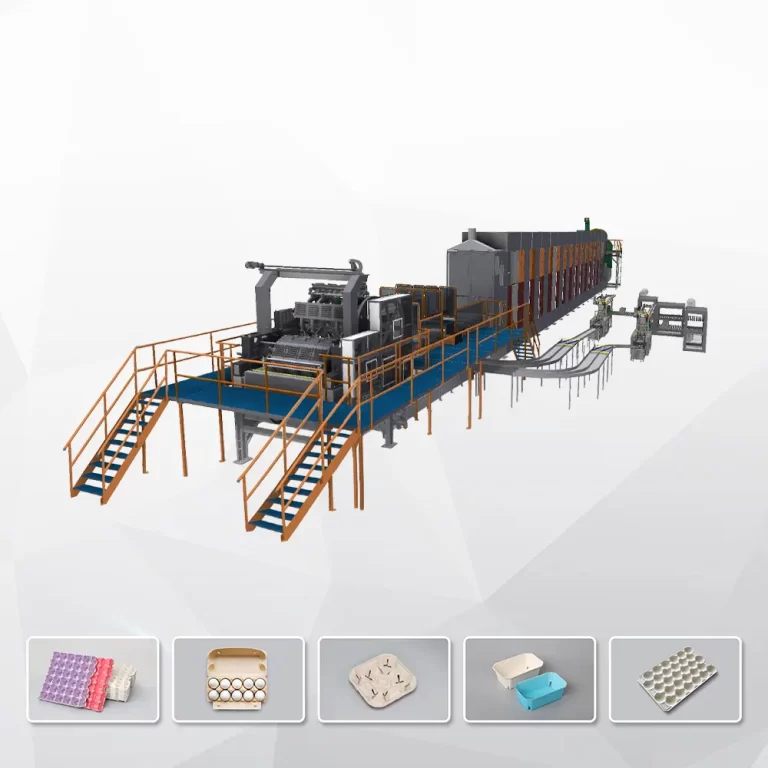
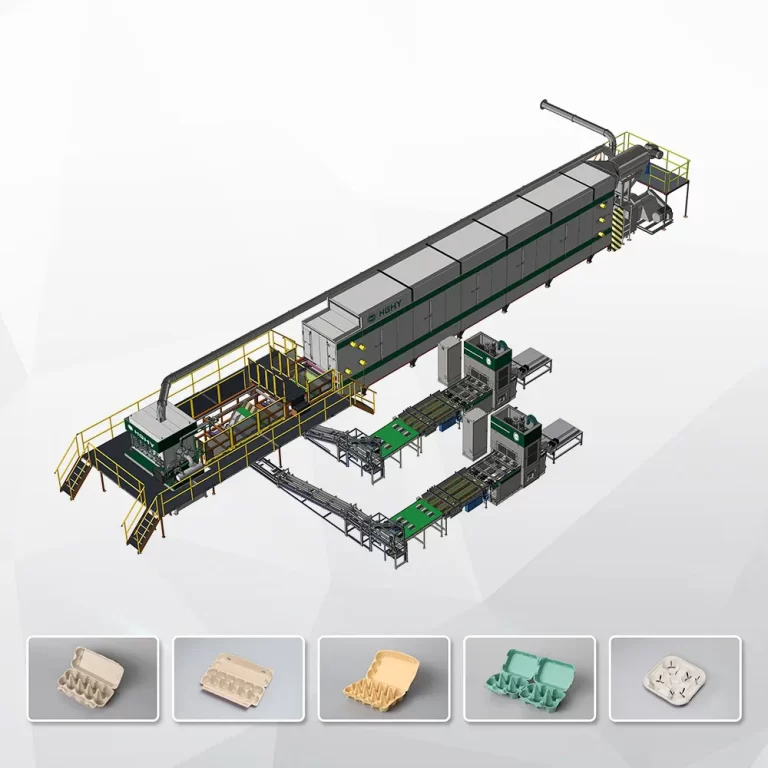
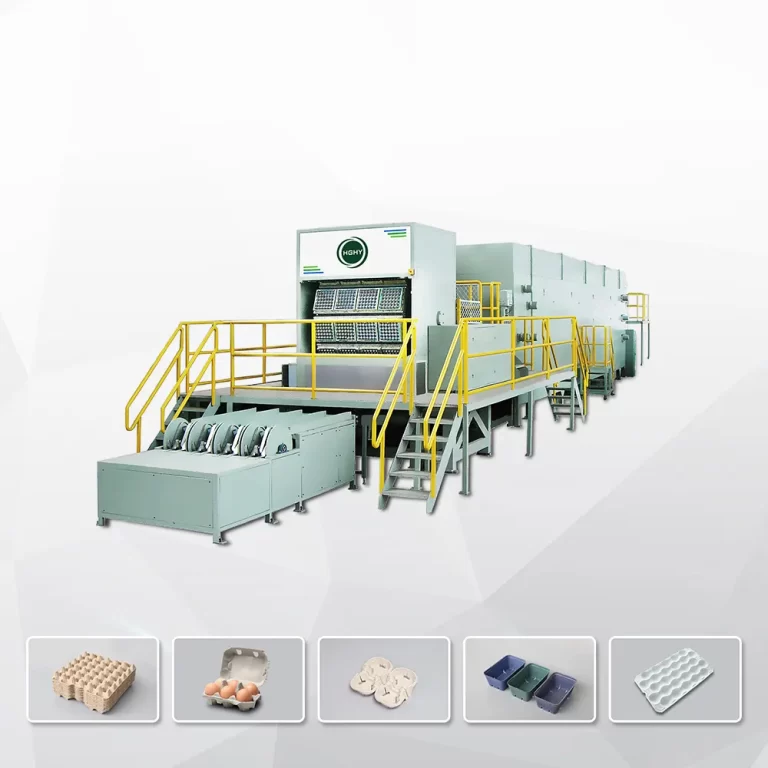
Shockproof Paper Tray
Manufacturing Machine
Paper trays fail in one of two ways: they crack under load, or they collapse on impact. If you're sourcing packaging for electronics, glassware, ceramics, or any fragile product, the machine that makes the tray is where the problem — or the solution — starts.
This guide covers what separates a capable shockproof paper tray machine from a standard pulp molding line, what to ask manufacturers before placing an order, and how to evaluate whether a machine will actually deliver the cushioning performance your customers need.
What Makes a Paper Tray "Shockproof"
A standard paper tray holds shape. A shockproof paper tray absorbs and distributes impact energy — typically through a combination of wall thickness control, fiber density, and three-dimensional rib geometry. The machine determines all three.
Mold Precision & Rib Depth
Structural ribs redirect impact force. A machine capable of 8–12mm rib depth with ±0.2mm tolerance can produce trays that meet drop-test standards for electronics packaging.
Pulp Concentration Control
Longer fibers interlock during formation, creating a denser matrix. Machines with closed-loop concentration control maintain fiber distribution more consistently than open-loop systems.
Hot-Press Forming
Hot-press machines apply heat and pressure simultaneously, compressing the fiber structure and improving surface density. This directly affects impact resistance — and it's often the deciding factor.
Machine Configurations: Rotary vs. Reciprocating
Two main configurations are available. The right choice depends on your volume, tray complexity, and floor space.
| Configuration | Output Rate | Best For | Tradeoff |
|---|---|---|---|
| Rotary Drum | 2,000–4,000 trays/hr | High-volume, simpler geometries | Slower mold changeover |
| Reciprocating | 800–2,000 trays/hr | Complex 3D shockproof profiles | Lower output |
| Hybrid | Variable | Volume + shockproof performance | Higher capital cost |
For electronics packaging, instruments, or any application where tray geometry is doing real cushioning work, reciprocating machines are worth the output tradeoff. Some manufacturers offer hybrid configurations that combine rotary transfer with a hot-press finishing station — worth evaluating if you need both output volume and shockproof performance.
Key Specifications to Request From Any Manufacturer
These are the numbers that matter. Don't accept spec sheet figures alone — ask for a production sample run on your specific tray geometry and measure the output yourself or through a third-party lab.
| Specification | Why It Matters | What to Ask For |
|---|---|---|
| Mold rib depth capacity | Determines structural cushioning potential | ≥8mm for electronics-grade trays |
| Dimensional tolerance | Consistency across a production run | ±0.3mm or better |
| Hot-press temperature range | Affects fiber density and surface hardness | 160–220°C typical range |
| Pulp concentration control | Open-loop vs. closed-loop stability | Closed-loop preferred |
| Cycle time per mold set | Actual output rate under load | Request under production conditions |
| Mold changeover time | Production flexibility | Under 4 hours for most operations |
| Energy consumption / 1,000 trays | Operating cost over time | Often overlooked in initial quotes |
What to Check During Factory Evaluation
If you're sourcing a machine at volume, an on-site visit before finalizing the order is standard practice. When you're there, look at four things:
The Mold Workshop
Mold quality is the ceiling on tray quality. A manufacturer with in-house CNC mold fabrication can iterate on tray geometry faster and maintain tighter tolerances than one that outsources molds. Ask to see the machining equipment and tolerance records for recent molds.
The Pulp Preparation System
Consistent fiber length and clean raw material feed directly affect shockproof performance. Look for enclosed pulp tanks, automated concentration monitoring, and a cleaning protocol for the feed lines.
The Quality Control Line
Shockproof trays should be tested for compression resistance and drop performance — not just visual inspection. Ask what percentage of output is tested and what the rejection criteria are.
Spare Parts Availability
Mold wear and press components are the most common failure points. Ask for a spare parts list and lead times. For machines sourced overseas, 4–6 week lead times on critical components can stop a production line cold.
Certifications and Compliance Questions
If you're supplying to regulated markets — particularly electronics, food-adjacent packaging, or medical devices — the machine supplier should be able to provide:
A supplier who can show you actual test results — not just claim the machine is capable — is a meaningfully better position than one who can't.
Equipment in Focus: Molded Pulp Insert Machine
The Molded Pulp Insert Machine is specifically designed for the shockproof insert segment — where tray geometry does active protective work rather than simply holding shape. Here's how it fits the applications covered in this guide.
 Featured Equipment
Molded Pulp Insert Machine
Built for manufacturing precision-fit shockproof inserts from recycled paper pulp — the inner packaging used to hold electronics, glassware, cosmetics, and fragile components securely during transit and drop events.
Unlike standard egg tray lines, this machine is optimized for complex three-dimensional insert profiles with deep pockets, multi-compartment layouts, and tight dimensional tolerances. The forming process uses hot-press action to achieve the fiber density needed for genuine impact absorption — not just shape retention.
Honest Limitations to Understand
No paper tray — regardless of how it's made — replaces foam or air cushion packaging for extreme fragility requirements. Shockproof paper trays are well-suited for:
Where paper trays have real limits
- Precision optics, semiconductor wafers, or instruments with sub-millimeter alignment requirements — additional foam or air cushioning layers are typically needed
- Very high drop heights (>1.5m onto hard surfaces) where energy absorption demands exceed what fiber density alone can provide
- Wet or high-humidity environments unless the tray uses water-resistant additives, which affect compostability claims
A machine supplier who claims their trays eliminate all other packaging needs for any product should be treated with skepticism. The honest answer is that paper inserts are excellent for the middle tier of fragility — and often used as a primary layer alongside other cushioning for the high end.
What Separates a Good Machine From a Marginal One
The difference usually comes down to three things: mold depth capability, whether the forming process uses hot-press, and how well pulp concentration is controlled during a production run. Everything else — output rate, footprint, automation level — is secondary to getting those three right for your specific application.
Ask for production samples before committing. Measure them. Run them through whatever drop or compression test your product requires. That's the only data that actually matters.
Frequently Asked Questions
What makes a paper tray shockproof?
What is the difference between rotary and reciprocating machines?
What certifications should a supplier provide?
What products are best suited for shockproof paper tray packaging?
How important is closed-loop pulp concentration control?
Ready to Evaluate a Shockproof Tray Machine?
Get technical specifications, production samples, and layout details tailored to your output and product requirements.
View the Molded Pulp Insert Machine English
  Español
  Français
  ไทย
ไทย