
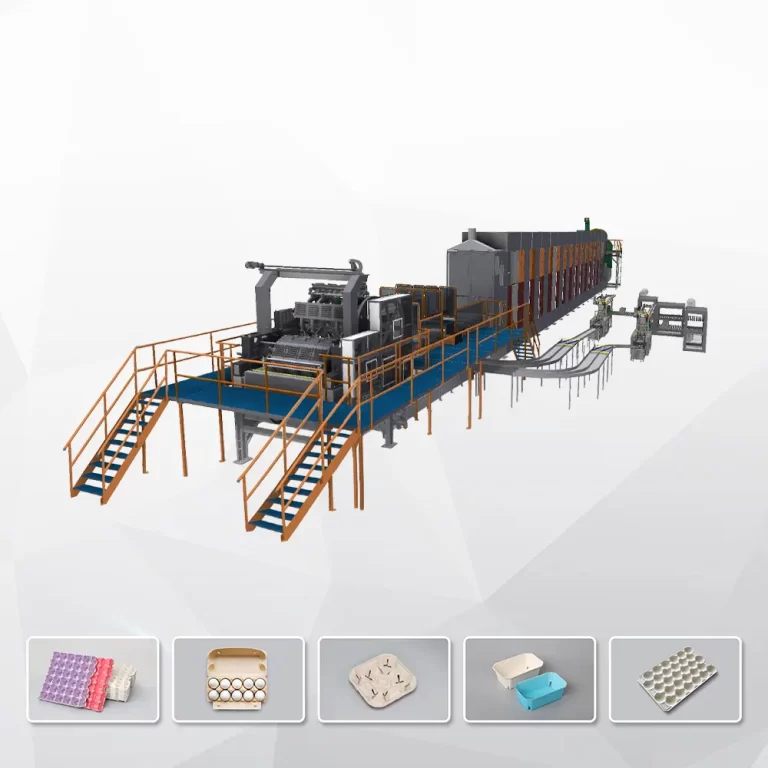
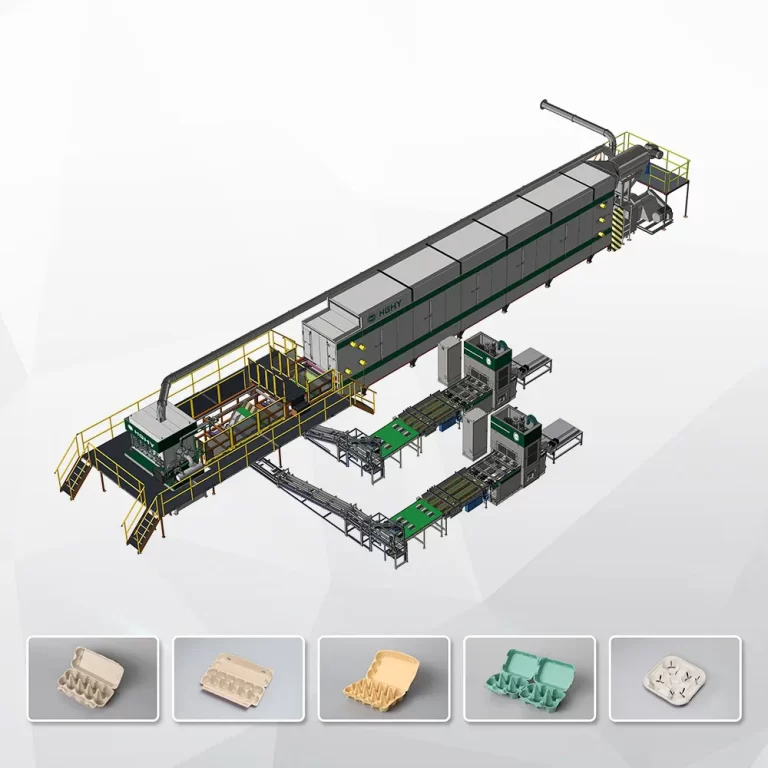
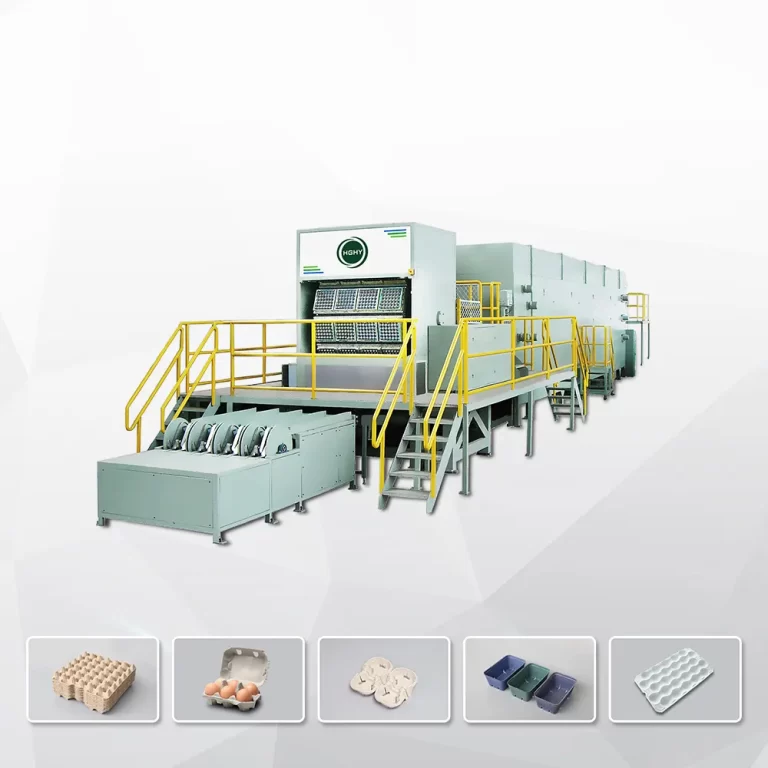

In the context of The Complete Guide to Pulp Egg Tray & Egg Box Production Lines, understanding testing and quality standards for pulp egg boxes is essential for manufacturers aiming to produce reliable, eco-friendly packaging. The production of pulp egg boxes does not begin at the machine; it starts with the careful selection of raw materials and continues through rigorous quality control at every stage of the manufacturing process.

Raw Materials: Foundation of Quality
The primary raw material for pulp egg boxes is recycled paper, including waste newspapers, cardboard, old books, and other paper scraps. The quality of these raw materials directly impacts the strength, durability, and uniformity of the final product. High-quality recycled pulp should have minimal contaminants, appropriate fiber length, and consistent moisture content.
To achieve these standards, the raw materials are first sorted, cleaned, and sometimes blended to maintain uniformity. Impurities such as plastics, staples, and adhesives are removed to prevent defects during molding. Additionally, some production lines incorporate virgin fiber or chemical additives to enhance pulp strength, water resistance, and flexibility.
Pulp Preparation and Fiber Quality Control
Once the raw materials are processed into pulp slurry, controlling the fiber quality becomes critical. This involves measuring fiber consistency, refining fibers to achieve optimal bonding, and adjusting water-to-fiber ratios. Proper refining ensures that the fibers interlock tightly during molding, resulting in egg boxes with excellent structural integrity and resistance to deformation.
Molding and Forming: Standardized Testing
During the molding stage, pulp egg boxes are shaped using specialized forming machines. To guarantee product quality, manufacturers conduct regular inspections on weight, thickness, and dimensional accuracy. Standardized tests, such as compression and drop tests, simulate real-world handling conditions to ensure the boxes can withstand transportation and storage without breaking.
Drying and Post-Processing Controls
After forming, egg boxes are dried either through natural air drying or in hot air or steam drying systems. Maintaining consistent temperature and drying time is critical; uneven drying can lead to warping, cracking, or reduced strength. Moisture content is closely monitored to meet industry standards, typically around 5–8%, ensuring the boxes are dry enough for handling yet not brittle.
Final Quality Assurance and Compliance
The last stage of quality control involves comprehensive checks on physical, functional, and safety parameters. Egg boxes are assessed for:
- Load-bearing capacity: Ensuring they can hold the intended number of eggs without deformation.
- Water resistance: Especially important for maintaining integrity in humid environments.
- Uniformity: Consistent dimensions and weight across production batches.
- Environmental compliance: Certification for biodegradability and recyclability, confirming the eco-friendly nature of the product.
Adherence to international quality standards, such as ISO 9001 for quality management and ASTM standards for packaging materials, reinforces reliability and market competitiveness.
Continuous Improvement through Testing
A critical aspect of pulp egg tray and egg box production lines is the ongoing use of testing data to refine processes. Feedback from mechanical tests, customer usage, and environmental conditions informs adjustments in pulp preparation, molding pressure, and drying techniques. This creates a continuous loop of improvement, ensuring that each batch of egg boxes meets stringent quality standards.
Conclusion
In summary, ensuring high-quality pulp egg boxes requires meticulous attention to raw material selection, fiber preparation, molding precision, and post-processing quality control. By implementing standardized testing and adhering to rigorous quality standards, manufacturers not only produce durable and reliable packaging but also reinforce the sustainability and eco-friendliness of pulp egg tray and egg box production lines, aligning perfectly with the principles outlined in The Complete Guide to Pulp Egg Tray & Egg Box Production Lines.
 English
  Español
  Français
  ไทย
ไทย