

A New Business Opportunity Combining Egg Farming, Packaging, and Sustainable Profit Growth
In recent years, the global poultry industry has been undergoing a major transformation. More and more poultry farms, egg producers, and agricultural companies are no longer focusing only on egg production itself. Instead, they are moving toward an integrated business model that combines:
- Egg farming
- Packaging manufacturing
- Brand development
- Sustainable production
Among these changes, molded pulp egg tray and egg carton production has become one of the fastest-growing investment directions for modern poultry farms.
What was once considered a simple packaging accessory is now becoming an important part of cost control, supply chain management, environmental compliance, and long-term profitability.
For many poultry businesses, investing in an egg tray production line is no longer just about reducing packaging costs — it is becoming a strategic industrial upgrade.

The Poultry Industry Naturally Creates Stable Demand for Egg Trays
One of the biggest advantages of the egg tray business is that it is directly connected to daily egg production.
Eggs are produced every day.
Packaging is consumed every day.
This creates a continuous and highly stable demand for:
- Egg trays
- Egg cartons
- Transport packaging
- Retail packaging
Unlike many manufacturing industries that depend heavily on fluctuating customer orders, poultry farms already have their own built-in packaging demand.
For medium and large poultry farms, this creates a significant advantage:
The factory’s first customer is the farm itself.
This means that after installing an egg tray production line, part of the production capacity can immediately be consumed internally, greatly reducing market risk during the early investment stage.
Packaging Costs Are Becoming a Hidden Profit Factor in Poultry Farming
Traditionally, poultry farms focused mainly on:
- Feed costs
- Labor costs
- Disease management
- Egg production efficiency
However, as competition in the egg industry increases, many producers are realizing that packaging costs have become a major long-term operational expense.
Large poultry farms consume enormous quantities of egg trays every day.
Relying entirely on external suppliers often creates problems such as:
- Rising packaging prices
- Delivery delays
- Seasonal shortages
- Transportation costs
- Limited packaging customization
As profit margins in egg farming become more competitive, controlling packaging costs is becoming increasingly important.
This is one of the key reasons why more poultry farms are starting to build their own molded pulp packaging facilities.
Building an Egg Tray Factory Means More Than Saving Money
For modern poultry farms, the value of investing in an egg tray production line goes far beyond simply reducing purchasing expenses.
The real advantage is gaining control over the packaging supply chain.
Stable Packaging Supply Improves Operational Security
Eggs are highly sensitive agricultural products that require continuous transportation and distribution.
During peak seasons, packaging shortages can seriously affect delivery schedules and sales operations.
With an in-house egg tray factory, poultry farms can:
- Control production schedules
- Adjust output according to egg production volume
- Reduce dependence on outside suppliers
- Avoid sudden price increases
- Ensure uninterrupted packaging supply
For large-scale poultry businesses, this greatly improves operational stability and long-term planning.
Integrated “Farm + Packaging” Operations Create Stronger Competitiveness
Modern agriculture is increasingly moving toward vertically integrated business models.
Egg tray production fits perfectly into this trend.
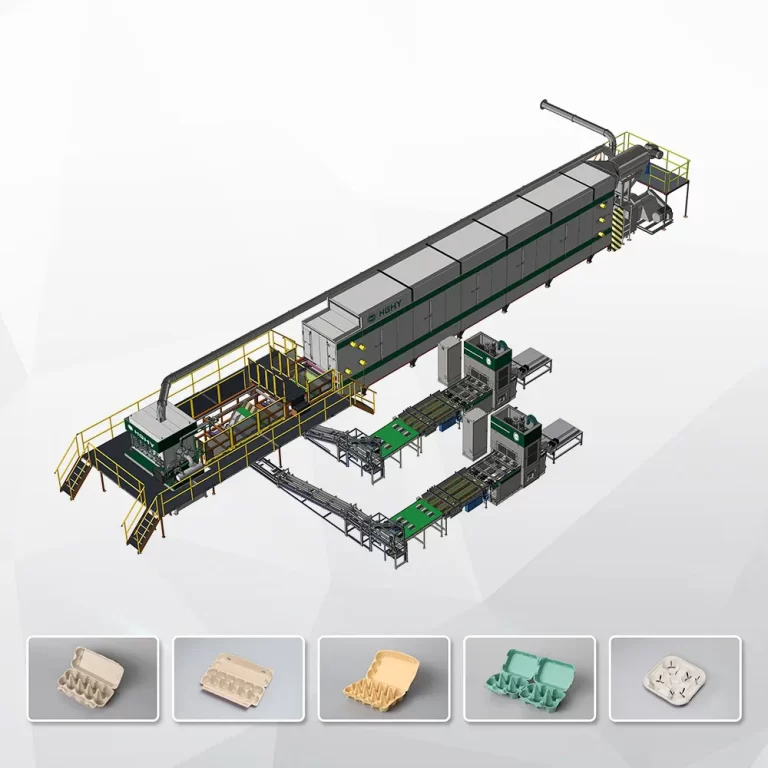
A typical integrated system may include:
Waste paper recycling → Pulping → Egg tray forming → Egg packaging → Distribution
This creates a circular economy model that combines:
- Sustainable manufacturing
- Waste recycling
- Agricultural production
- Eco-friendly packaging
As environmental regulations become stricter worldwide, this type of integrated operation is becoming increasingly valuable.
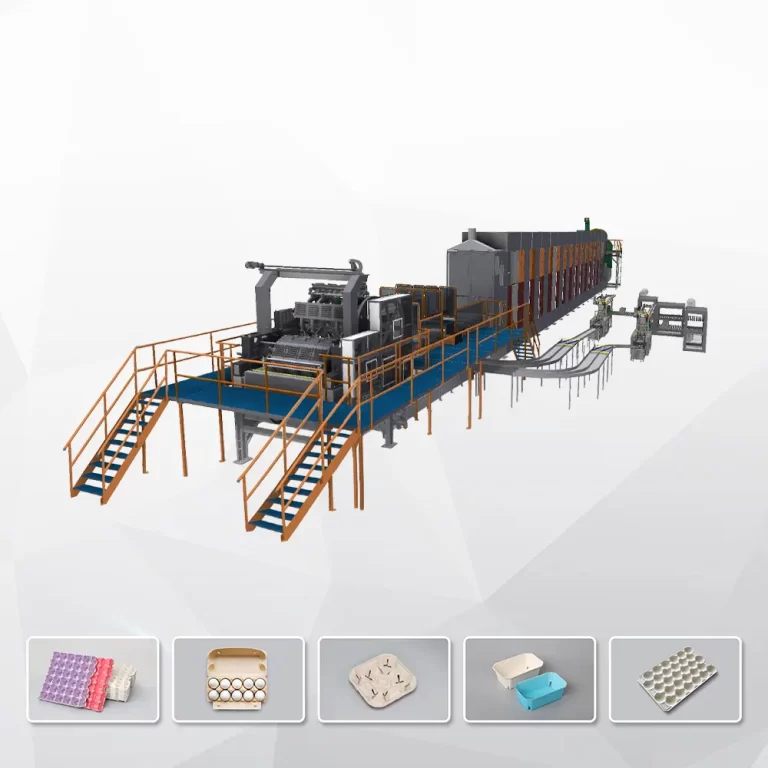
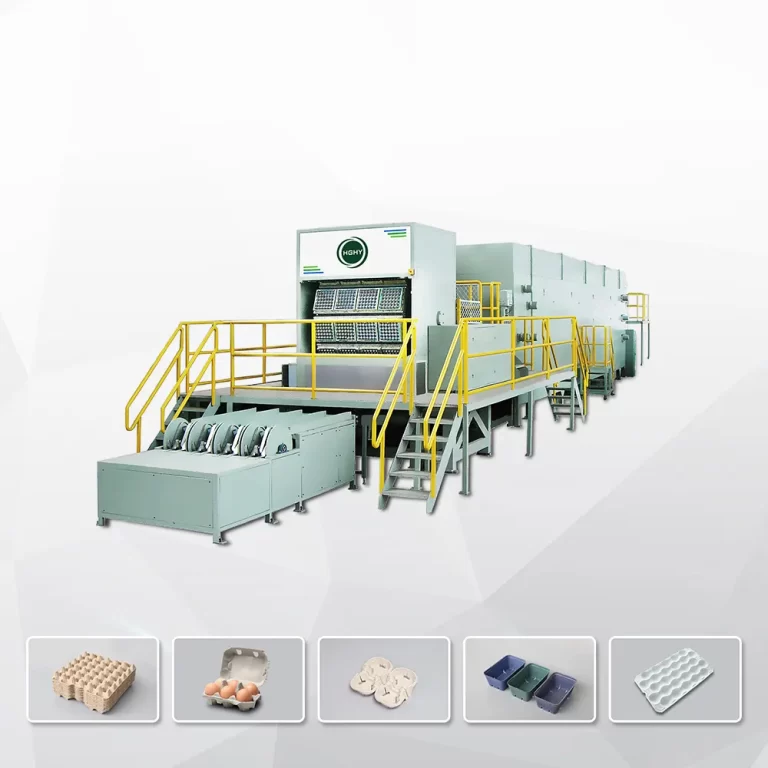
One Machine Can Produce Both Egg Trays and Egg Cartons
Many first-time investors assume that egg tray machines can only produce traditional 30-cell egg trays.
In reality, modern pulp molding equipment is highly flexible.
The production process is based on:
- Pulp preparation
- Vacuum forming
- Drying and hot pressing
The final product shape depends mainly on the mold.
This means the same production line can manufacture different products simply by changing molds.
For example, the same machine can produce:
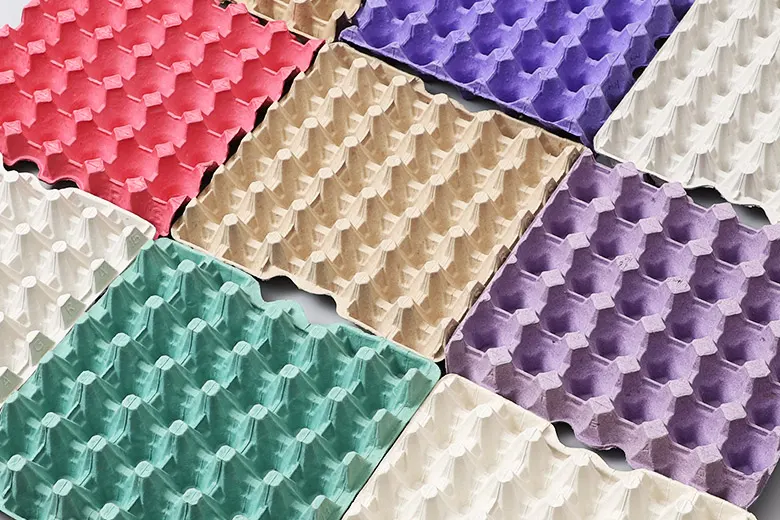
- 30-cell egg trays
- 20-cell egg trays
- 6-egg cartons
- 10-egg cartons
- 12-egg retail cartons
- Duck egg packaging
- Fruit trays
- Industrial protective packaging
This flexibility significantly increases equipment utilization and investment return.
Egg Cartons Offer Higher Added Value Than Standard Egg Trays
Traditional egg trays are mainly transportation products.
Their market characteristics include:
- Large-volume demand
- Lower selling price
- High consumption frequency
Egg cartons, however, belong to the retail packaging market.
As supermarkets and consumers increasingly focus on branding and sustainability, demand for premium egg cartons is growing rapidly.
Especially in:
- Organic egg markets
- Supermarket retail chains
- Export packaging
- Premium agricultural brands
High-quality molded pulp egg cartons are becoming the preferred packaging solution.
Compared with standard trays, egg cartons offer:
- Higher profit margins
- Better brand presentation
- Stronger market differentiation
- Greater customization potential
This is why many poultry farms start with tray production and later expand into high-end carton manufacturing.
Environmental Policies Are Accelerating the Shift Away From Plastic Packaging
Around the world, governments and retailers are strengthening environmental regulations related to packaging materials.
Many countries are actively reducing the use of:
- Plastic packaging
- Foam packaging
- Non-recyclable materials
Molded pulp egg packaging offers several important advantages:
- Biodegradable
- Recyclable
- Eco-friendly
- Excellent cushioning protection
- Sustainable raw materials
As a result, molded pulp packaging is rapidly replacing plastic egg packaging in many markets.
This trend is expected to continue growing over the next decade.
Why Poultry Farms Have a Strong Advantage in This Industry
Compared with independent investors, poultry farms already possess several natural advantages:
Existing Packaging Demand
The farm itself provides stable internal consumption.
Established Customer Networks
Many farms already work with:
- Distributors
- Supermarkets
- Agricultural wholesalers
- Food supply chains
This creates additional opportunities to sell packaging products externally.
Easier Brand Expansion
Modern consumers increasingly value sustainable packaging.
Customized molded pulp egg cartons help farms improve:
- Product image
- Brand recognition
- Retail competitiveness
Opportunity to Develop a Second Business Sector
Many farms eventually discover that packaging itself becomes a profitable independent business.
Over time, some poultry companies evolve into:
“Egg production + packaging manufacturing” dual-industry enterprises.
Conclusion
For modern poultry farms, investing in an egg tray and egg carton production line is no longer just a packaging decision.
It is a strategic step toward:
- Lower operating costs
- Greater supply chain control
- Environmental compliance
- Higher product value
- Long-term business expansion
As global demand for sustainable packaging continues to grow, the combination of:
“Egg Farming + Eco-Friendly Packaging”
is becoming one of the most promising business opportunities in the agricultural industry.
For poultry farms that invest early, the future opportunity may extend far beyond eggs — into the rapidly growing global sustainable packaging market.
 English
  Español
  Français
  ไทย
ไทย